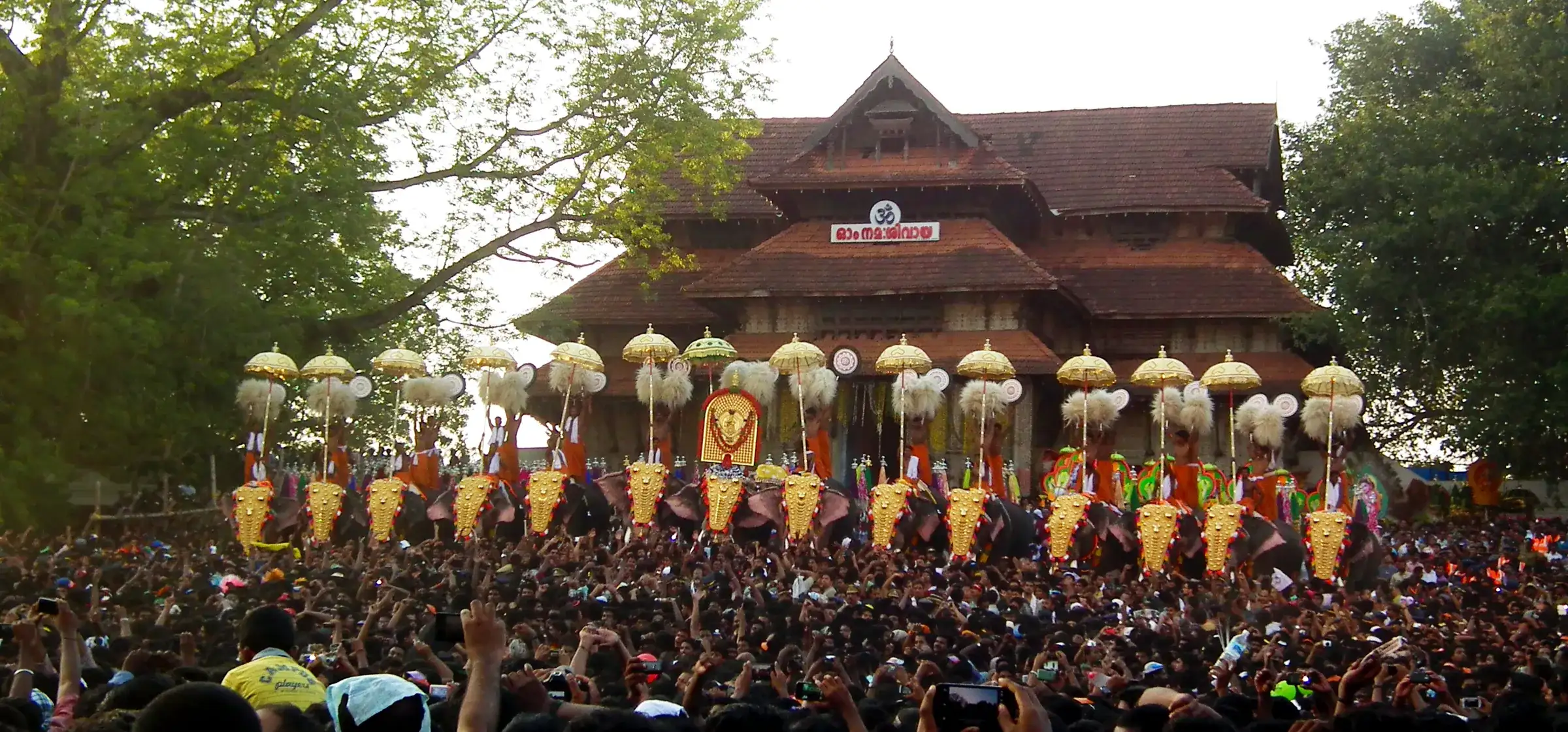
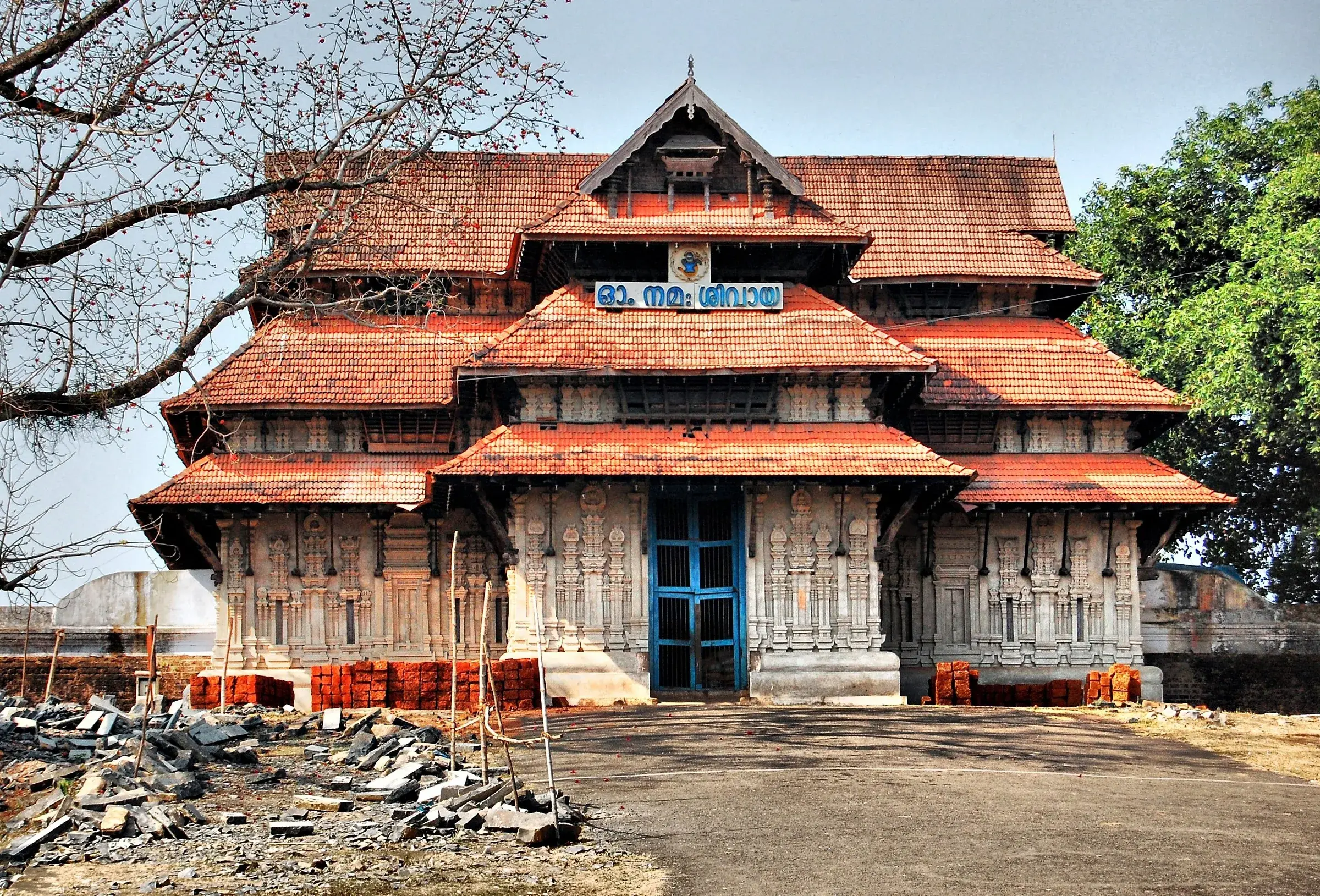
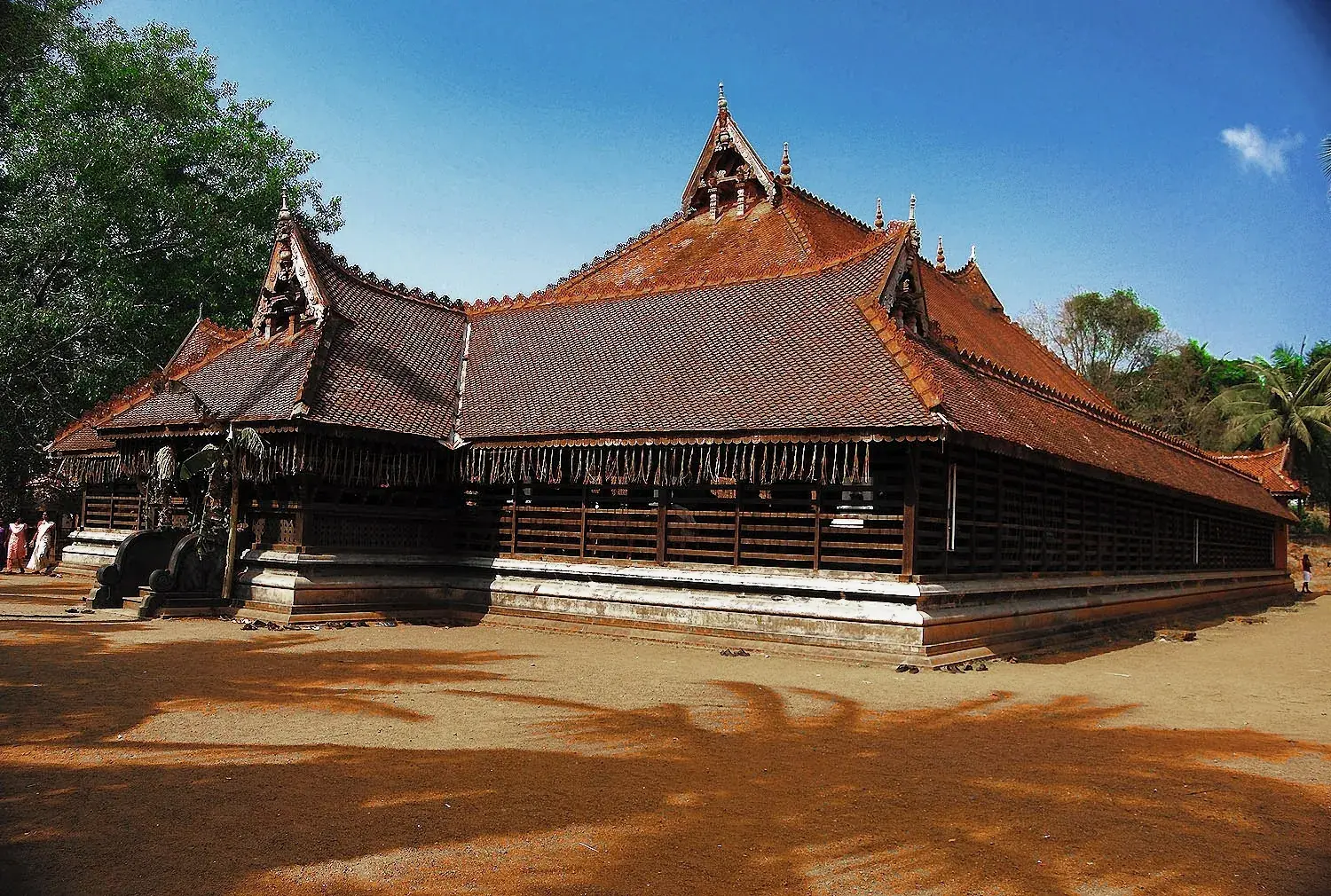
Thrissur's name is usually traced to 'Thiru-Shiva-Perur', the town bearing Shiva's name, and the city grew around the Vadakkunnathan temple on the Thekkinkadu hill. Its southern coast holds an even older story: Kodungallur, long identified with the Chera port of Muziris and the capital of the later Chera Perumals at Mahodayapuram.
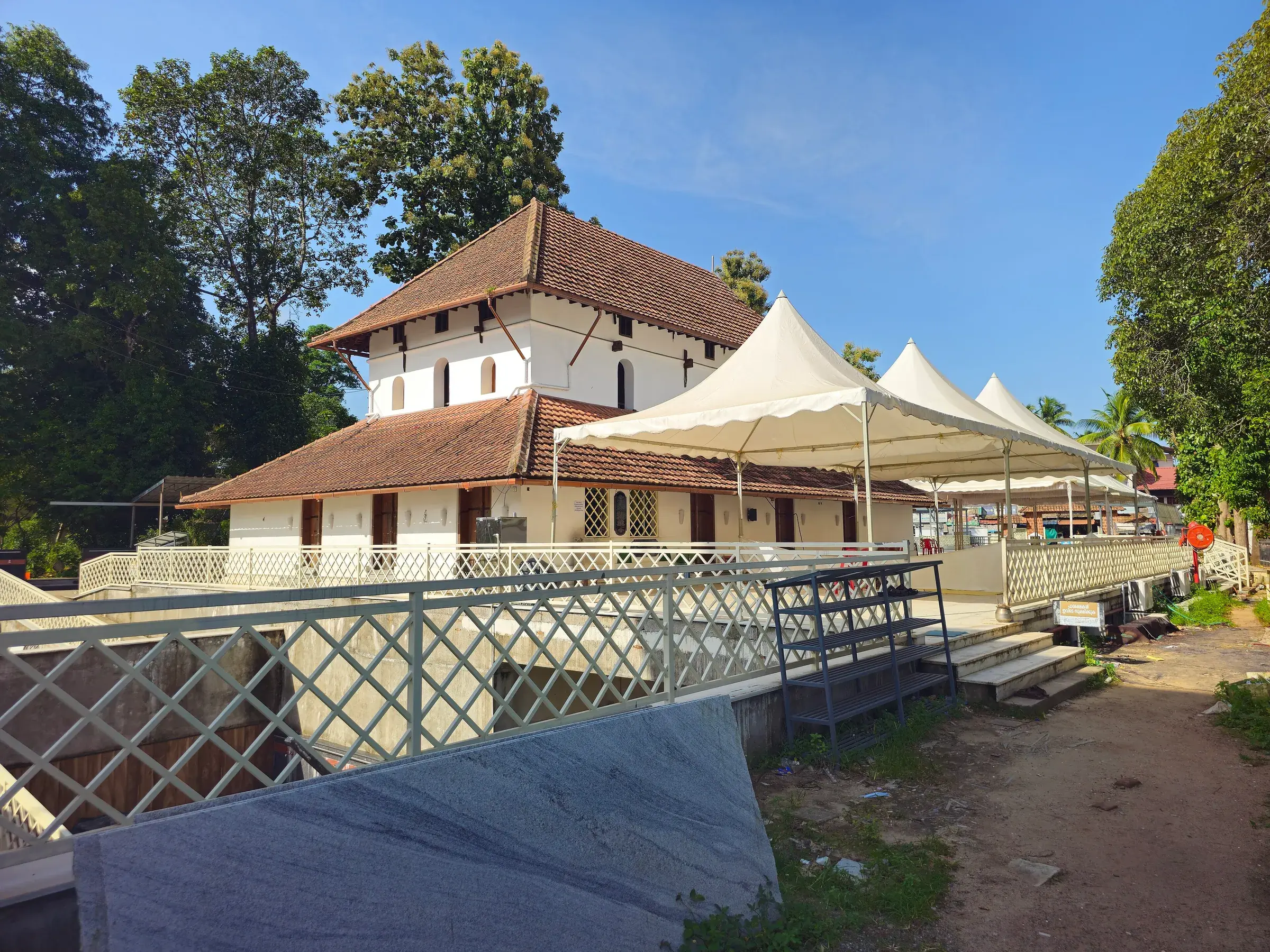
Excavations at nearby Pattanam since 2007 have uncovered Roman amphorae, beads and pottery from across the ancient world, adding weight to the long-held identification. Tradition places the arrival of the apostle Thomas at Kodungallur in 52 CE, and the Cheraman Juma Masjid is held by tradition to be among the earliest mosques in India.
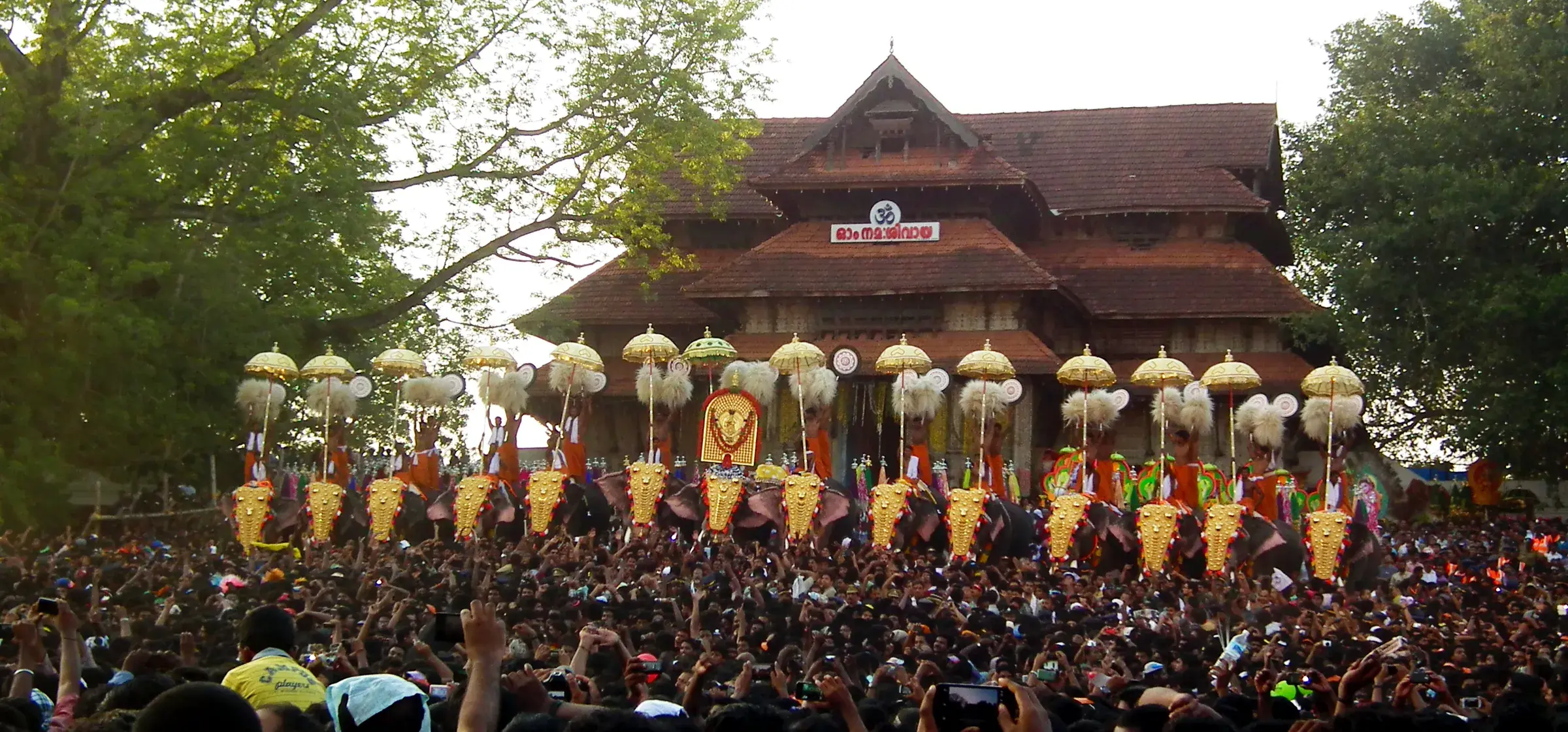
The modern city owes much to Sakthan Thampuran (Rama Varma, who ruled Cochin from 1790 to 1805). He cleared the forest around the temple, laid out the town and is credited with starting Thrissur Pooram in 1798, uniting the temples of the region in a single great festival.
In 1930 the poet Vallathol Narayana Menon and Manakkulam Mukunda Raja founded Kerala Kalamandalam to save Kathakali and other classical arts; it moved to Cheruthuruthy on the banks of the Bharathapuzha in 1937. Thrissur has kept that role as a guardian of Kerala's performing traditions ever since.