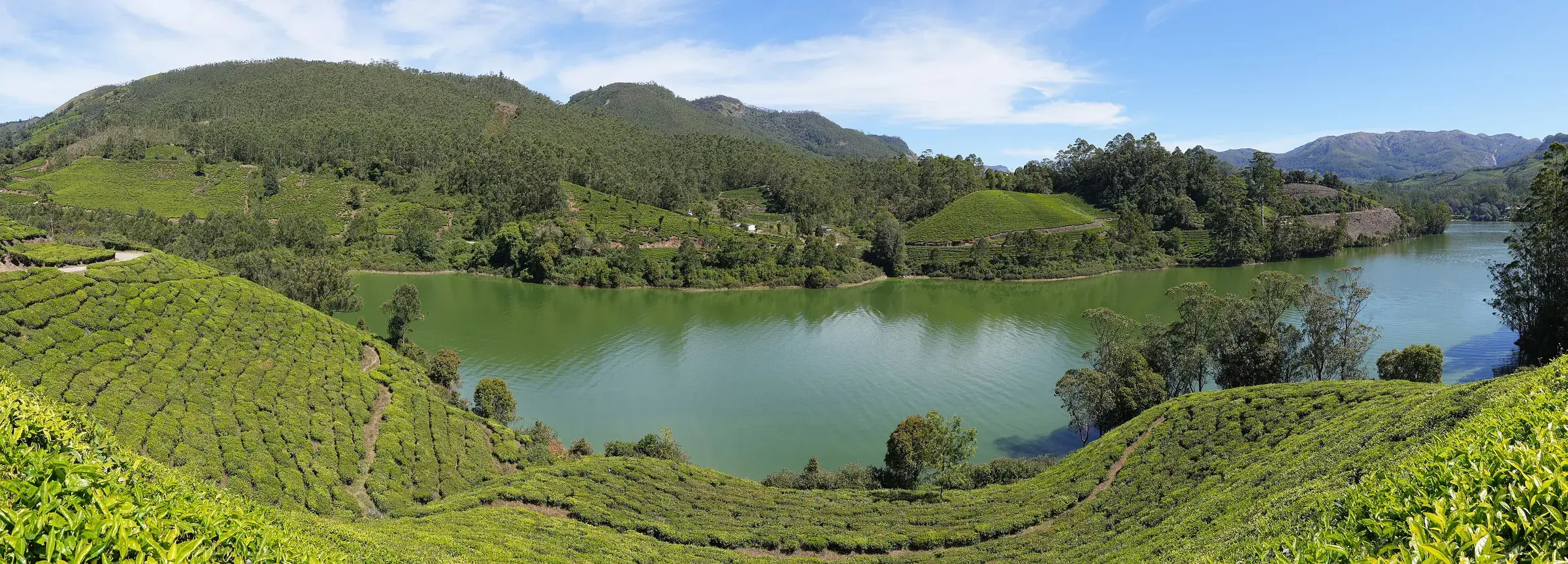
Tea-covered hills and the town of Munnar

District 06 of 14

ഇടുക്കി

Idukki

Spice hills, seas of tea and the roof of South India.

Quick facts

A high, rugged land of tea estates, spice gardens and tiger forests, crowned by Anamudi, the highest peak in India south of the Himalayas.

Formed

26 January 1972

Headquarters

Painavu

Area

4,358 km²

Population

11,08,974

Census of India 2011

Known for

  • Munnar tea
  • Anamudi (2,695 m)
  • Periyar Tiger Reserve
  • Cardamom
  • Idukki Arch Dam

History

The story of Idukki

Idukki's history is written in stone long before it was written on paper. At Marayur, megalithic dolmens and rock paintings point to settlement thousands of years old, and Adivasi communities such as the Muthuvan have lived in these hills for generations.

In 1895 the Mullaperiyar Dam, built under Colonel John Pennycuick, flooded a forest valley to send Periyar water east to Tamil Nadu, under a lease agreed with Travancore in 1886. The lake it created became the core of a game sanctuary in 1934 — today's Periyar Tiger Reserve, part of Project Tiger since 1978.

British planters arrived in the Kannan Devan Hills in the late nineteenth century and turned the high grasslands around Munnar — 'three rivers' — into tea. A monorail and later a light railway carried tea down the hills until the great flood of 1924, remembered in Malayalam as the flood of '99, swept them away.

The district was formed on 26 January 1972. Its great arch dam, completed in the mid-1970s, sits between the Kuravanmala and Kurathimala hills and drives Kerala's largest hydroelectric project. Idukki grows most of India's small cardamom, and once every twelve years its hills turn blue when the Neelakurinji blooms — last in 2018.
Places to visit

7 places in Idukki

Seasons are a guide: the south-west monsoon arrives in June and the north-east rains in October–November.

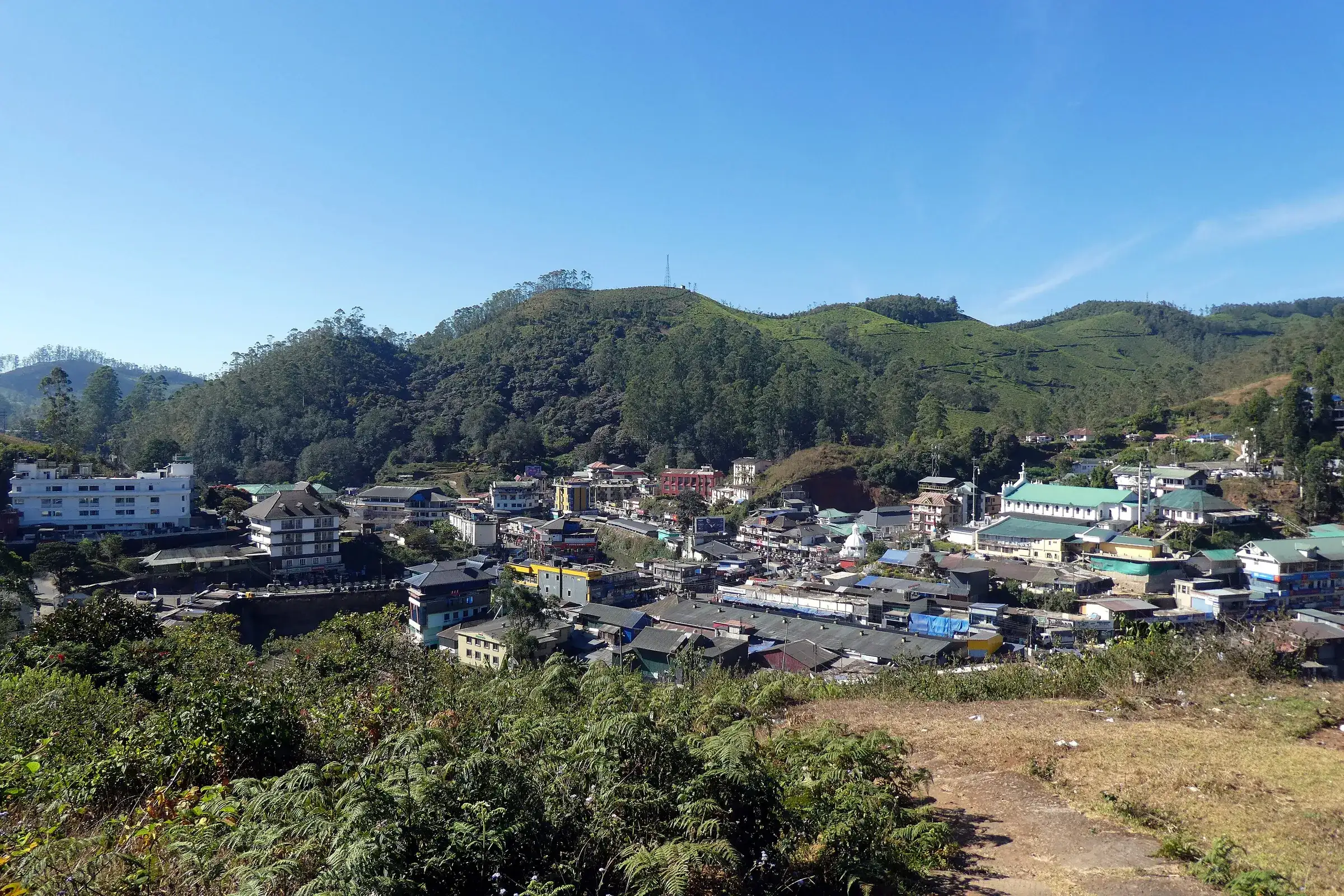
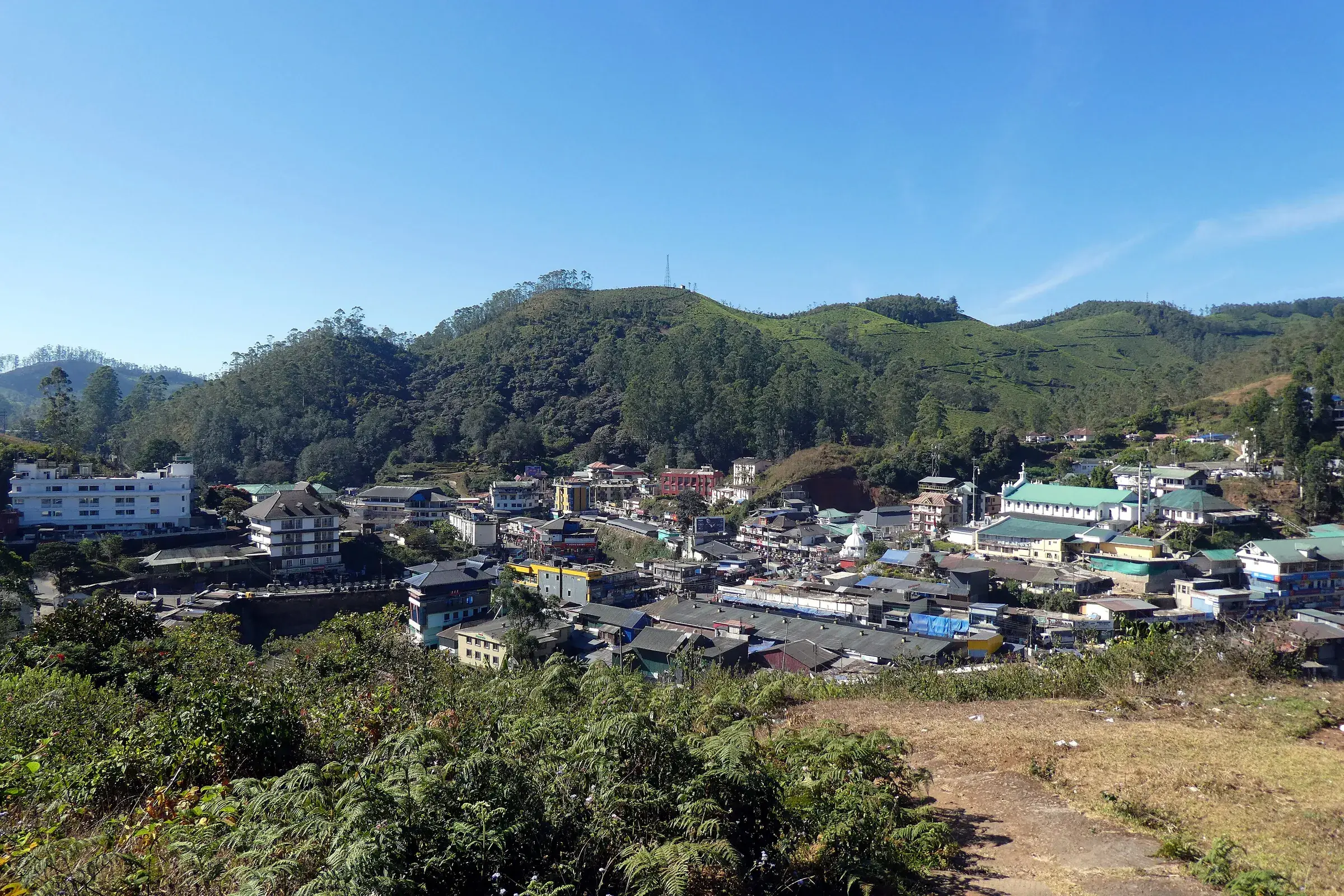
  1. Panoramic view over Munnar town and tea estates
    Hills
    01

    Munnar

    Endless rows of tea clipped like green velvet across the hills at around 1,600 metres. Visit a tea museum, walk the estates at dawn, and drive to Top Station for views over the Western Ghats.

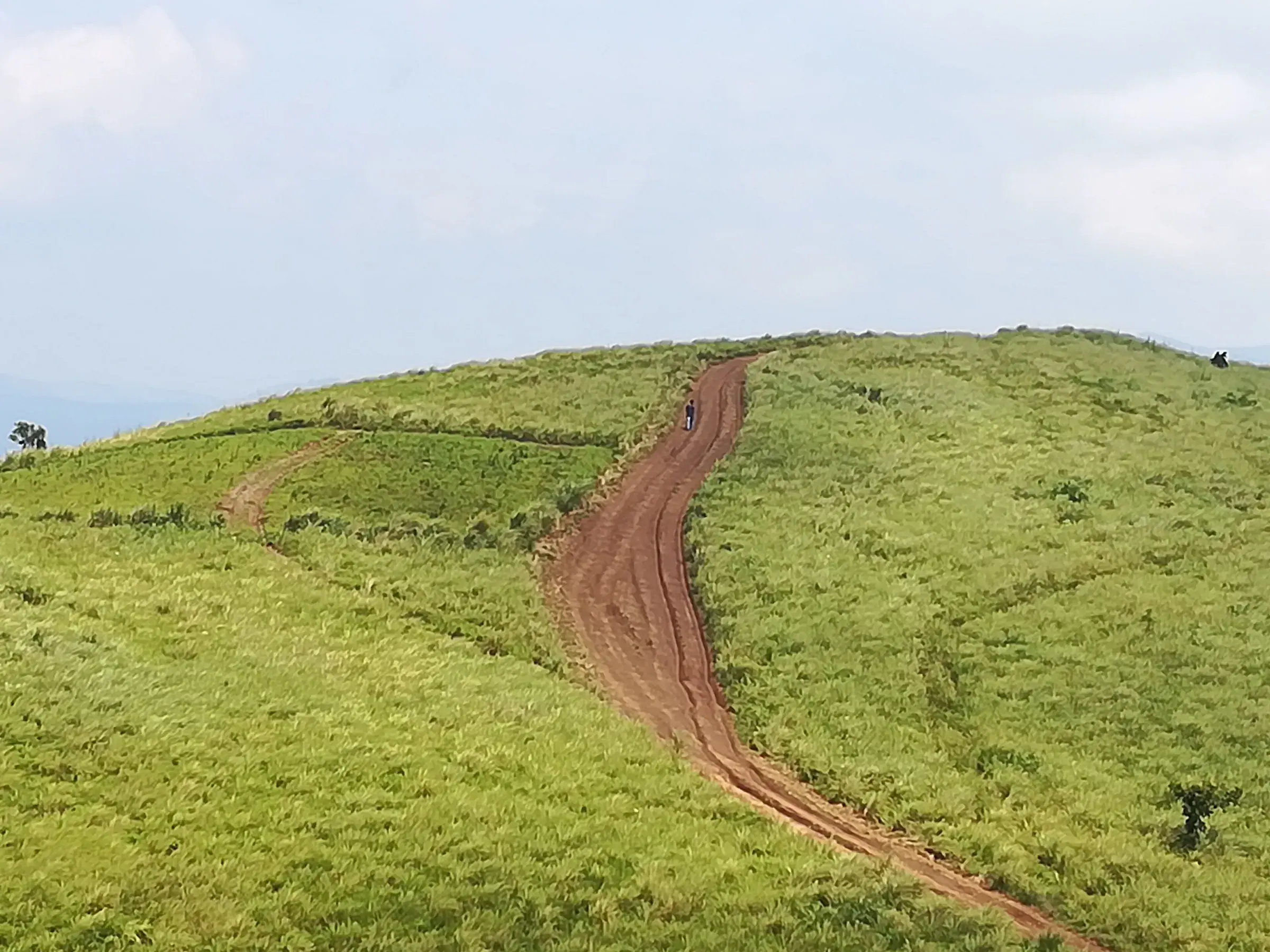
  2. Rolling grasslands of Eravikulam National Park
    Wildlife
    02

    Eravikulam National Park

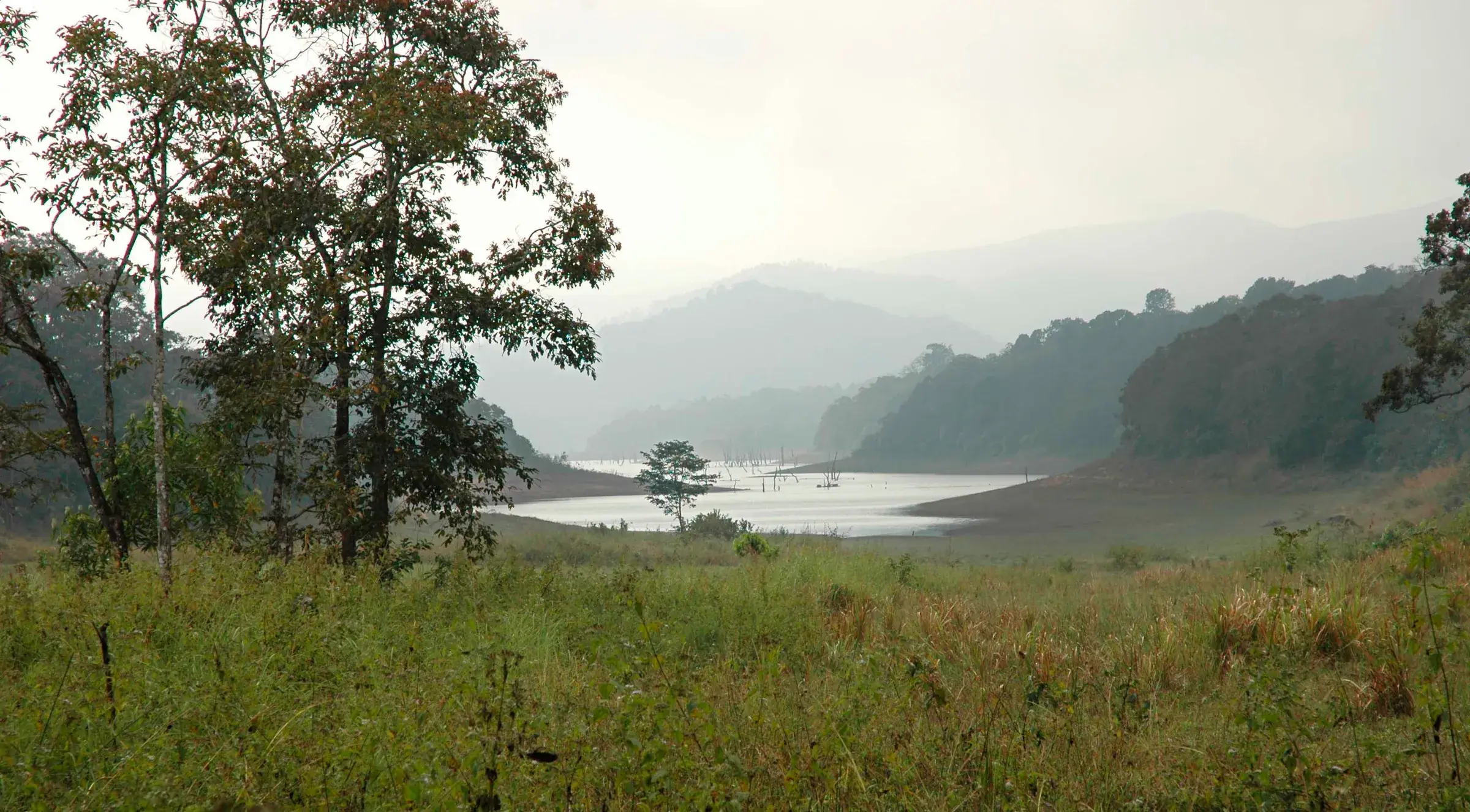
    High grasslands and shola forest that shelter the largest surviving population of the Nilgiri tahr, a mountain goat found only in the Western Ghats. Anamudi rises within the park.

    Best time · April – January (usually closed Feb–Mar for the tahr calving season)

    Google Maps(opens Eravikulam National Park in Google Maps, new tab)
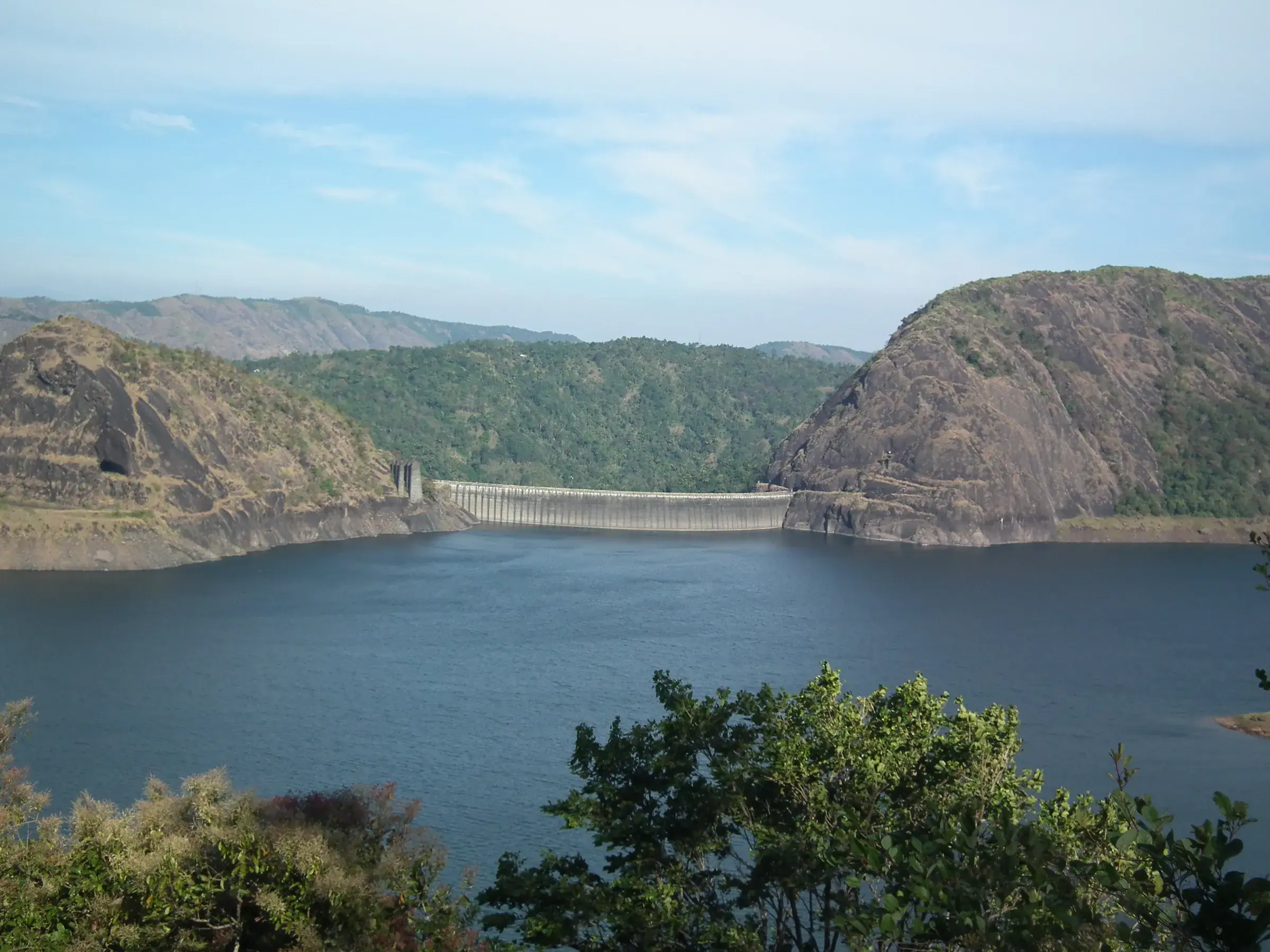
  3. The curved concrete wall of the Idukki Arch Dam between two hills
    Heritage
    04

    Idukki Arch Dam

    A great concrete arch about 169 metres high, locked between two granite hills above the Periyar. Opened to visitors on select dates; the drive through the reservoir country is spectacular.

    Best time · Open on announced dates, usually in holiday seasons

    Google Maps(opens Idukki Arch Dam in Google Maps, new tab)
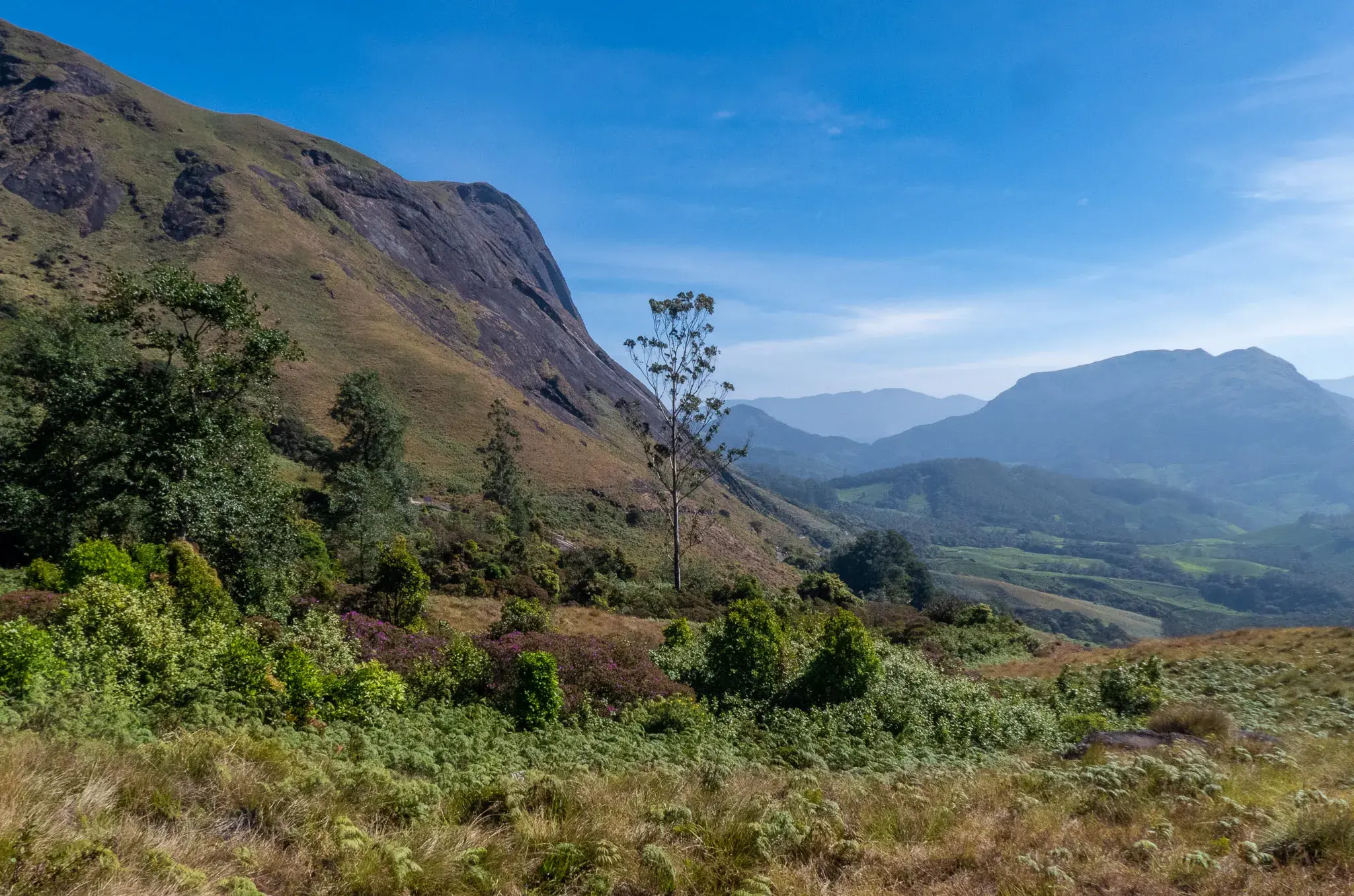
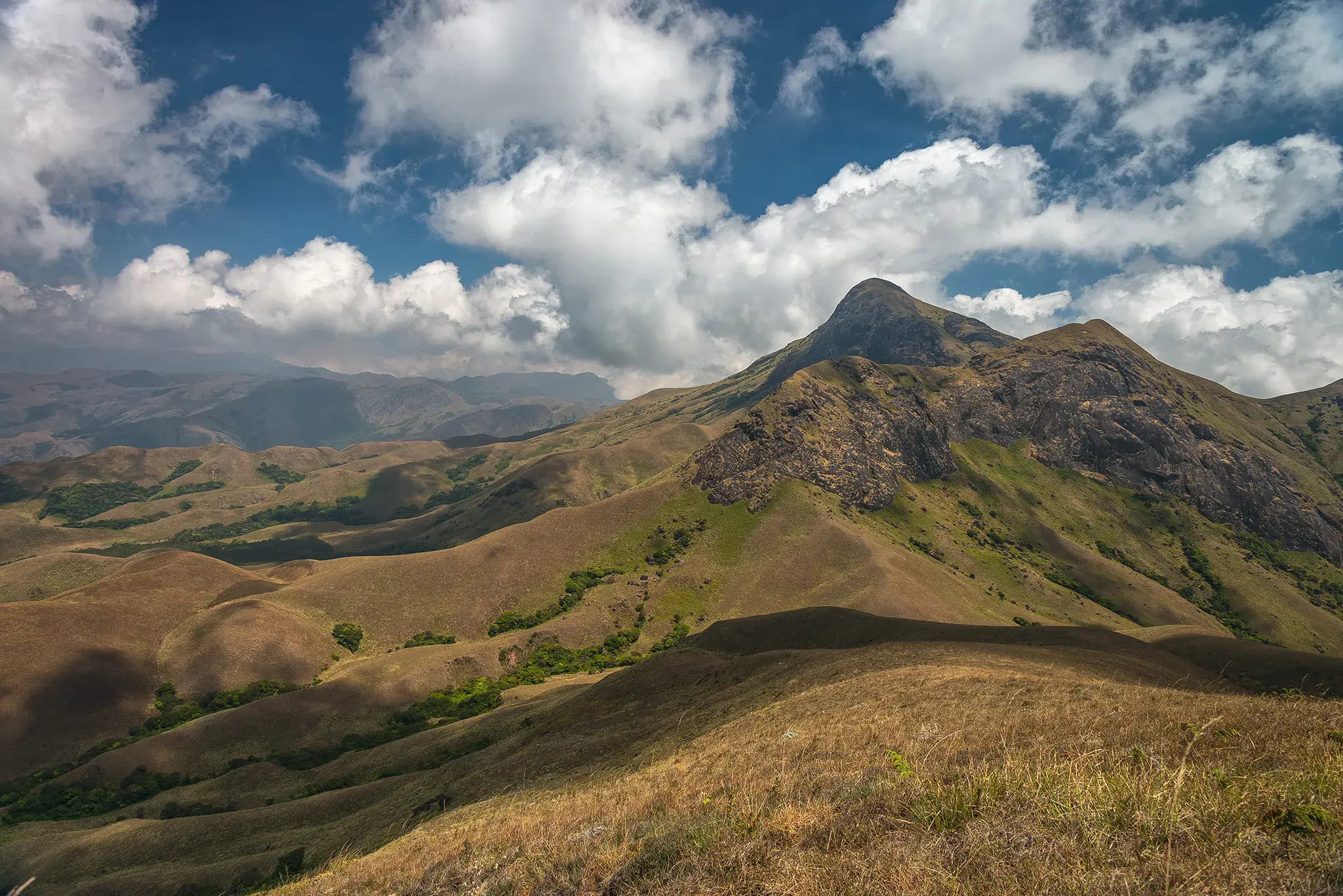
  4. The grassy slopes of Anamudi peak
    Hills
    06

    Anamudi

    At 2,695 metres, the highest point in India south of the Himalayas. The summit lies within Eravikulam National Park; trekking requires special forest department permission.

    Best time · Viewed from Eravikulam, April – January

    Google Maps(opens Anamudi in Google Maps, new tab)

Taste, celebrate, perform

Food, festivals & art forms

ഭക്ഷണം

Food

  • High-range tea

    Munnar's estates produce some of India's finest high-grown tea; buy it fresh from the factory outlets.

  • Cardamom

    Idukki's Cardamom Hills grow most of India's small cardamom — the 'queen of spices'.

  • Marayur sharkara

    Dark, mineral-rich jaggery from Marayur's sugarcane, protected by a GI tag.

  • Kappa & kanthari chutney

    Tapioca with a fiery crush of tiny bird's-eye chillies grown in hill gardens.

ഉത്സവങ്ങൾ

Festivals

  • Neelakurinji bloom

    Once every twelve years the hills turn violet-blue; the last bloom was in 2018.

  • Mangala Devi Chitra Pournami

    A hilltop temple on the Kerala–Tamil Nadu border, opened to worshippers only on the full moon of Chithira.

കലകൾ

Art forms

  • Adivasi traditions

    Communities such as the Muthuvan and Mannan keep their own music, dance and forest knowledge.

  • Marayur dolmens

    Megalithic burial chambers and rock art around Marayur — some of Kerala's oldest human marks.