സംസ്കാരം

A culture of lamps and drums

Performing arts that last all night, festivals shared by every faith, a feast eaten from a leaf, and a healing tradition thousands of years old.

01 · Performing arts

Performing arts

Kerala's stages are temple courtyards, village groves and lamp-lit halls. Its arts are total theatre — dance, drama, music, make-up and ritual at once.

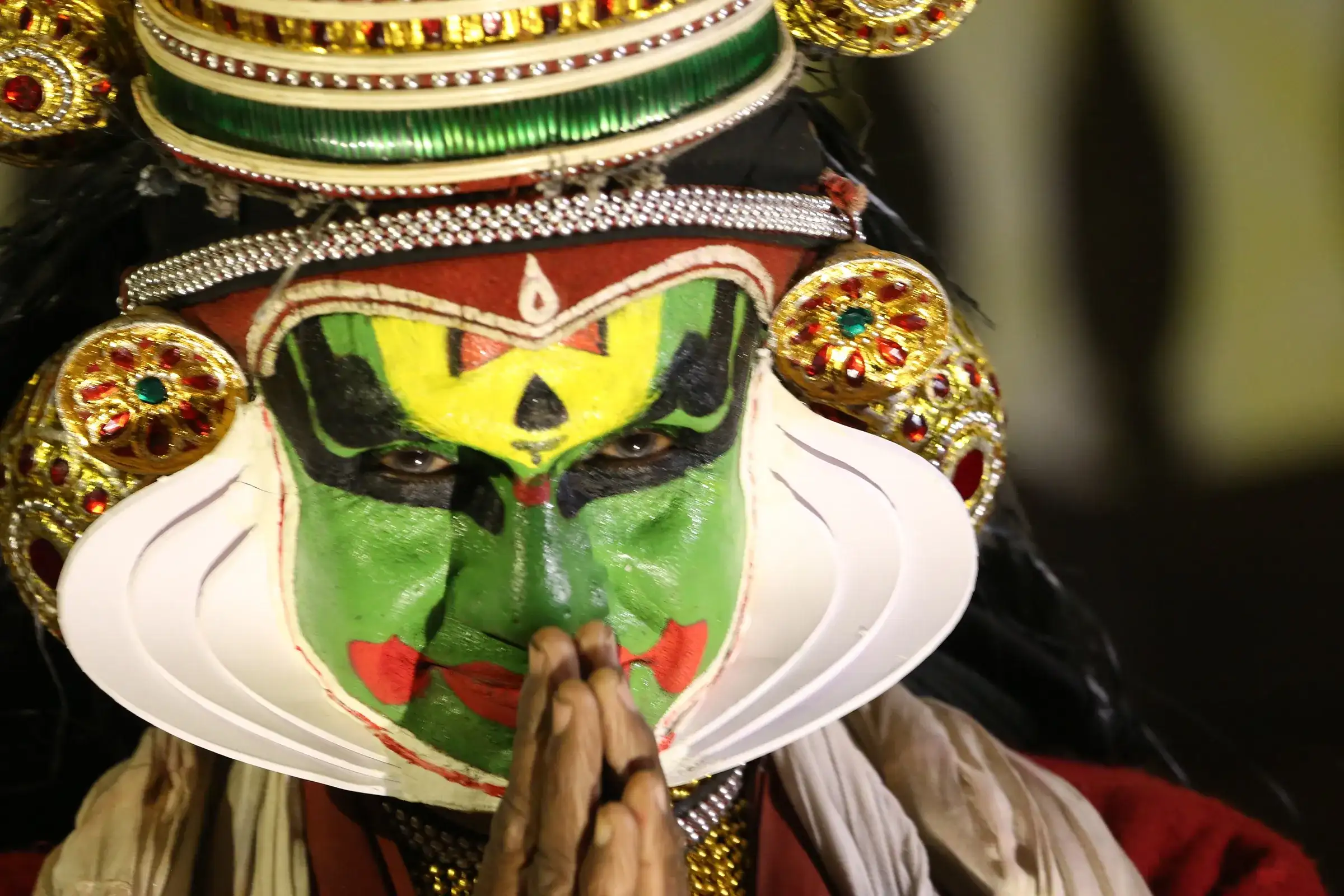
A Kathakali performer in green make-up and a white chutti frame

Photo: Devilal · CC BY-SA 4.0

Story-play

കഥകളി

Kathakali

Kathakali took shape in the seventeenth century, growing out of Ramanattam and Krishnanattam, and tells epic stories through codified hand gestures (mudras), eye movements and powerful footwork, accompanied by vocalists and drums.

  • Make-up takes hours: green 'pacha' faces for noble heroes, 'kathi' faces with red markings for proud villains, and a white 'chutti' frame built up from rice paste.
  • Traditionally performed all night by the light of a single large bronze lamp, the kalivilakku.
  • Kerala Kalamandalam, founded in 1930, played a decisive role in preserving it.

Where to see it · Kalamandalam (Thrissur), Fort Kochi, Thiruvananthapuram
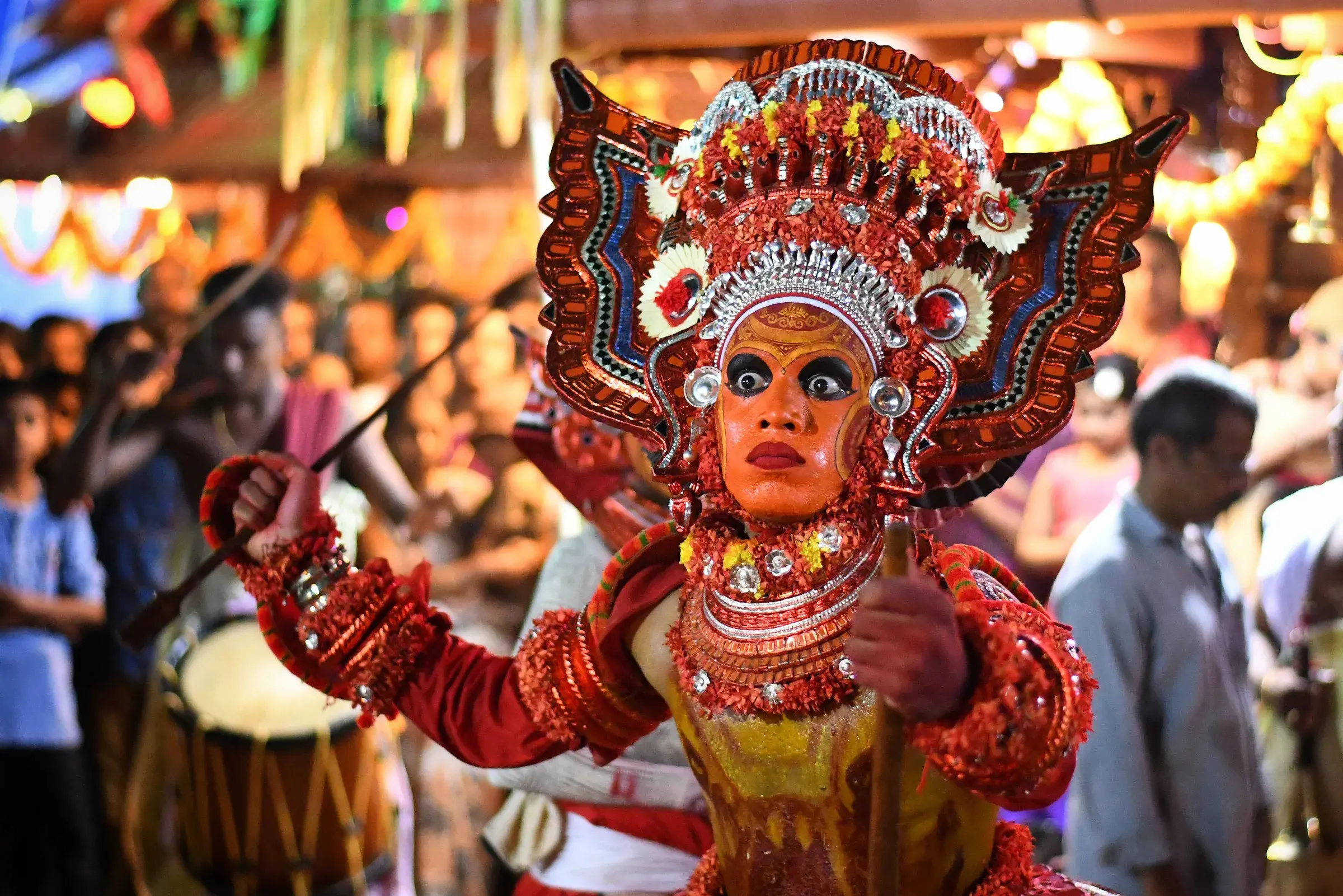
A Theyyam performer in a vivid red costume and headdress

Photo: Shagil Kannur · CC BY-SA 4.0

Where gods dance

തെയ്യം

Theyyam

In the sacred groves and shrines of north Kerala, a performer, after days of preparation and fasting, becomes the deity. Theyyam is worship as well as performance: devotees speak to the god and receive blessings.

  • More than four hundred forms exist, with headdresses that can tower several metres high.
  • Performed by members of particular hereditary communities, keeping alive forms of worship far older than the great temples.
  • The season runs roughly from November to May, especially in Kannur and Kasaragod.

Where to see it · Kannur, Kasaragod

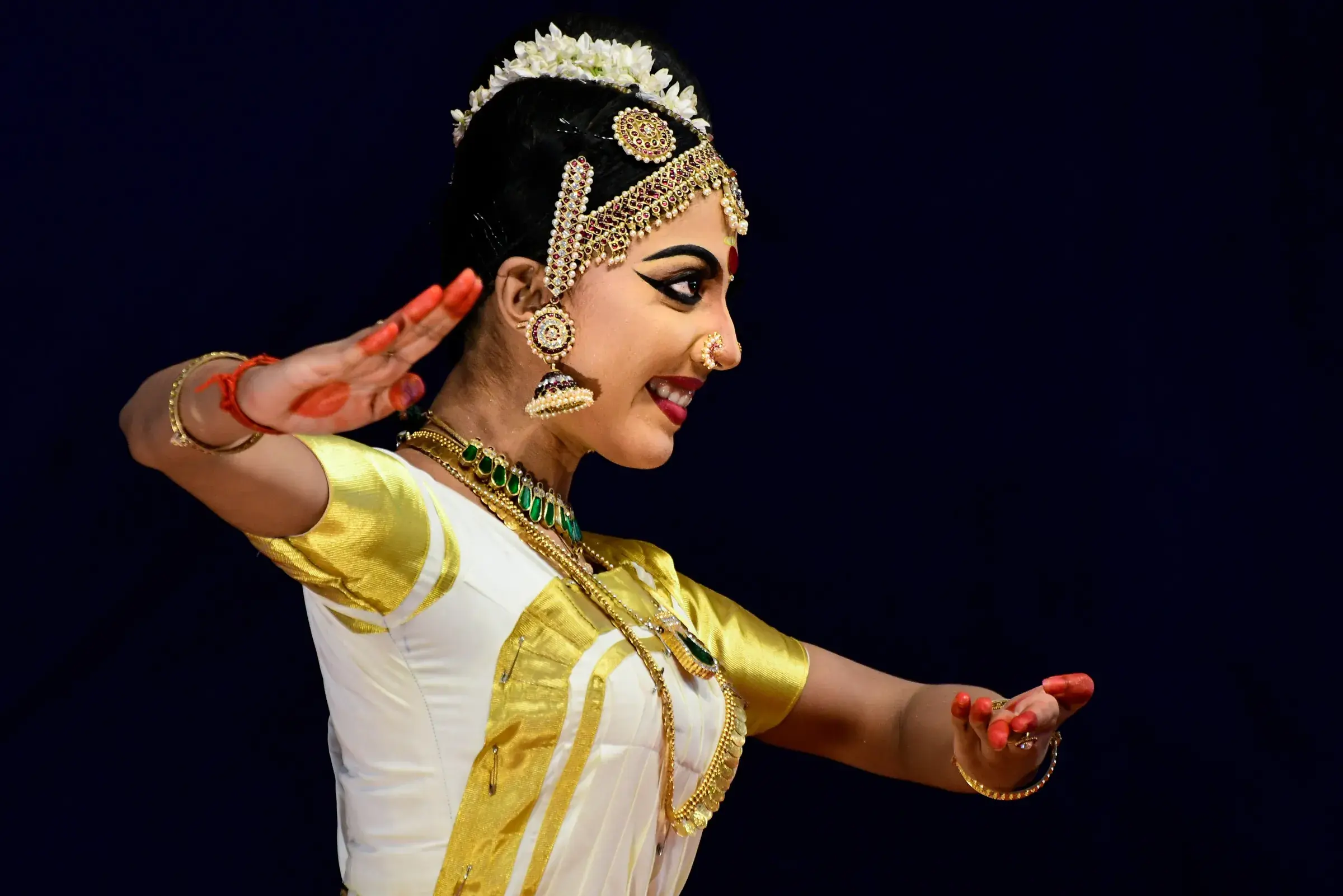
A Mohiniyattam dancer in a white and gold costume

Photo: Shagil Kannur · CC BY-SA 4.0

Dance of the enchantress

മോഹിനിയാട്ടം

Mohiniyattam

A graceful solo dance performed by women, named after Mohini, the enchanting form of Vishnu. Its swaying, circular movements are said to echo the palms and backwaters of Kerala.

  • Performed in a white-and-gold kasavu costume with jasmine in the hair.
  • Patronised in the court of Swathi Thirunal in the nineteenth century, then revived by the poet Vallathol at Kalamandalam.
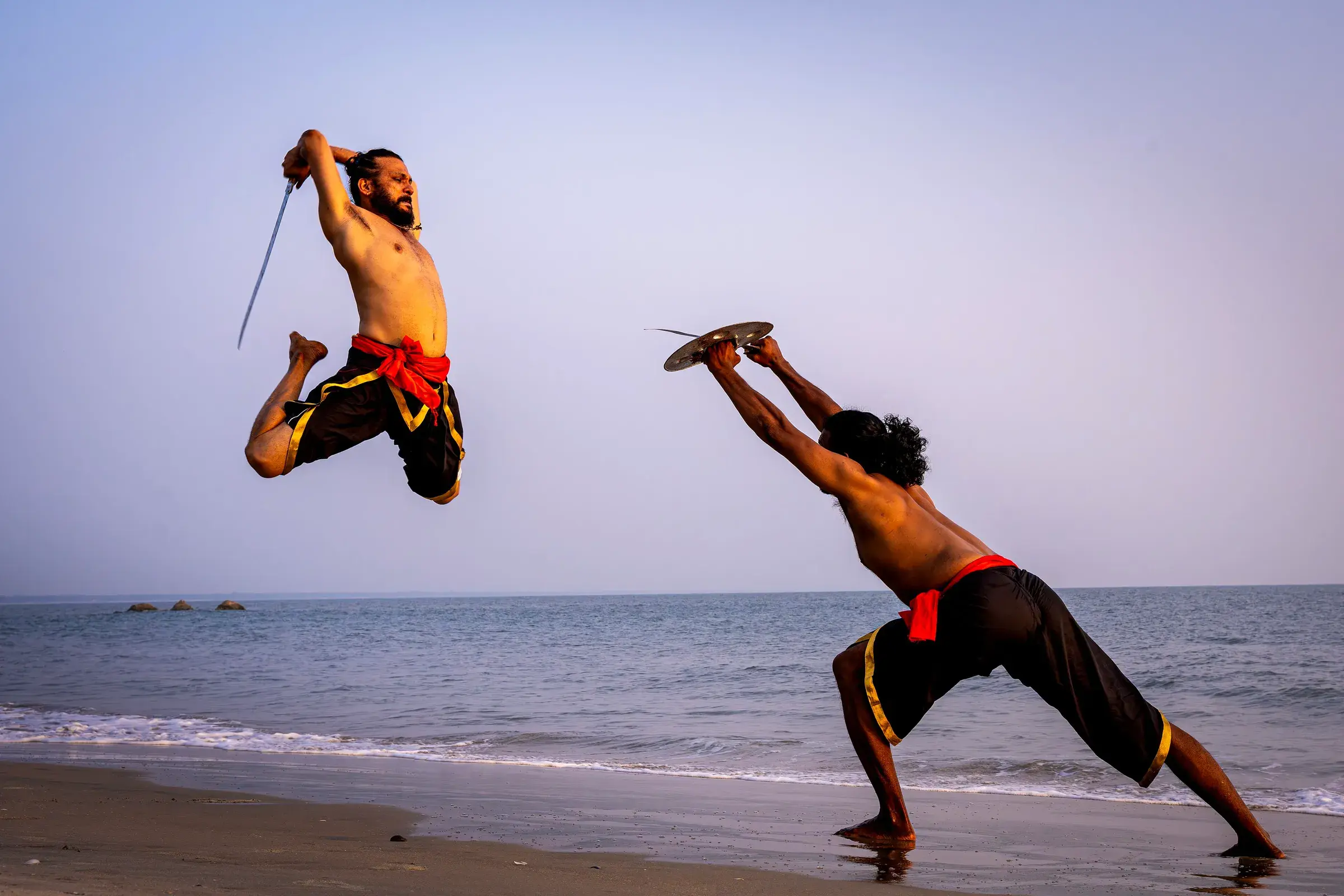
Two Kalaripayattu practitioners sparring with weapons

Photo: The pixelwriter2309 · CC BY-SA 4.0

The martial art

കളരിപ്പയറ്റ്

Kalaripayattu

One of the oldest surviving martial arts, practised in a sunken training ground called a kalari. Students progress from body conditioning to sticks, daggers and swords, and finally to unarmed combat.

  • Northern and southern styles differ in technique and weapons; the urumi, a flexible sword, is among the most spectacular.
  • Closely tied to Ayurvedic healing, including marma knowledge and uzhichil massage.
  • Northern Kerala's ballads, the Vadakkan Pattukal, celebrate its legendary warriors.
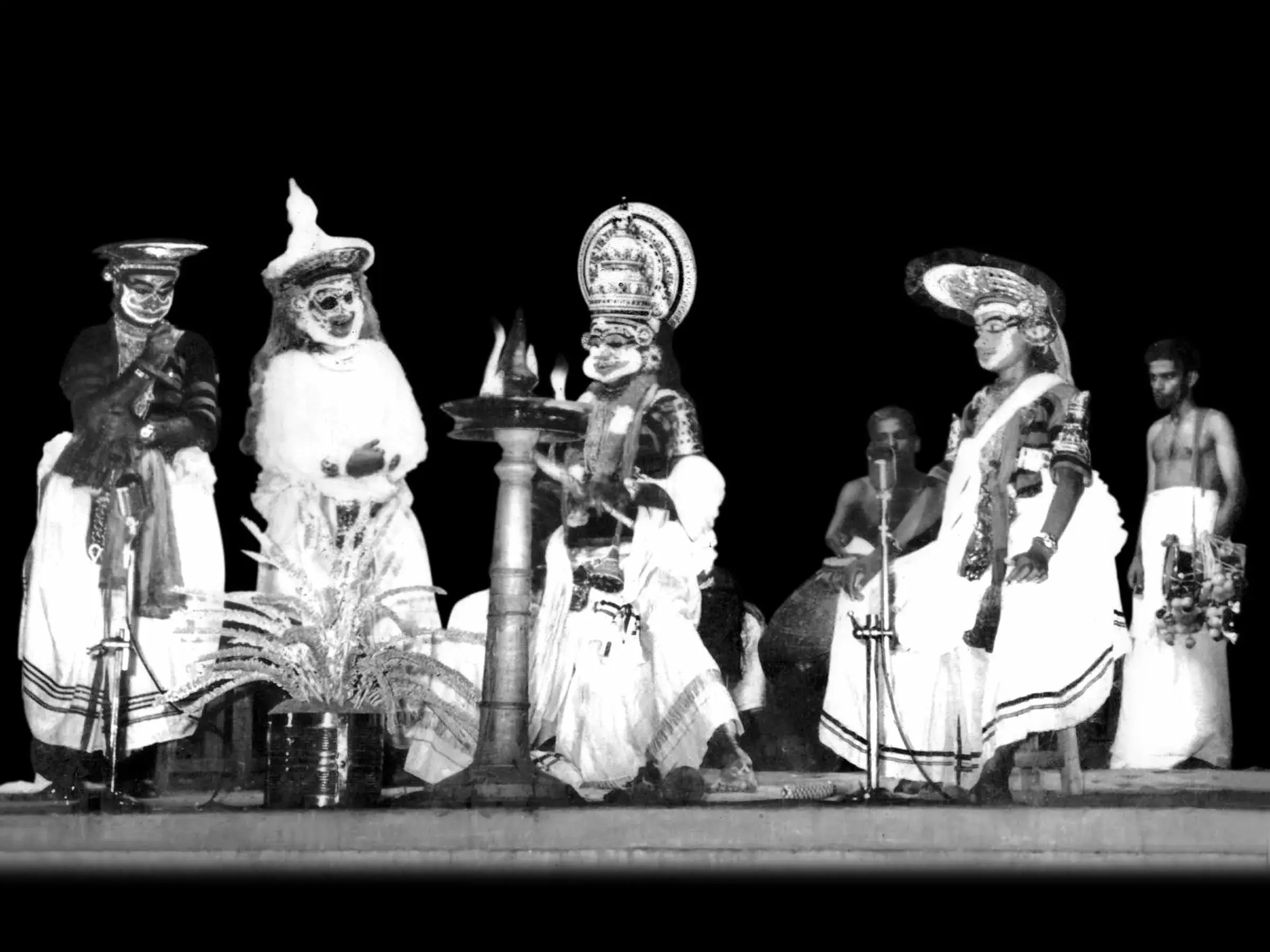
Koodiyattam performers on stage

Photo: Sreekanthv at English Wikipedia · CC BY-SA 3.0

Sanskrit temple theatre

കൂടിയാട്ടം

Koodiyattam

One of the oldest continuously performed theatre traditions in the world, staged in temple theatres called koothambalams. A single act can take many nights to perform in full.

  • Proclaimed by UNESCO in 2001 as a Masterpiece of the Oral and Intangible Heritage of Humanity.
  • Traditionally performed by the Chakyar and Nangiar communities, with Nambiars on the mizhavu drum.
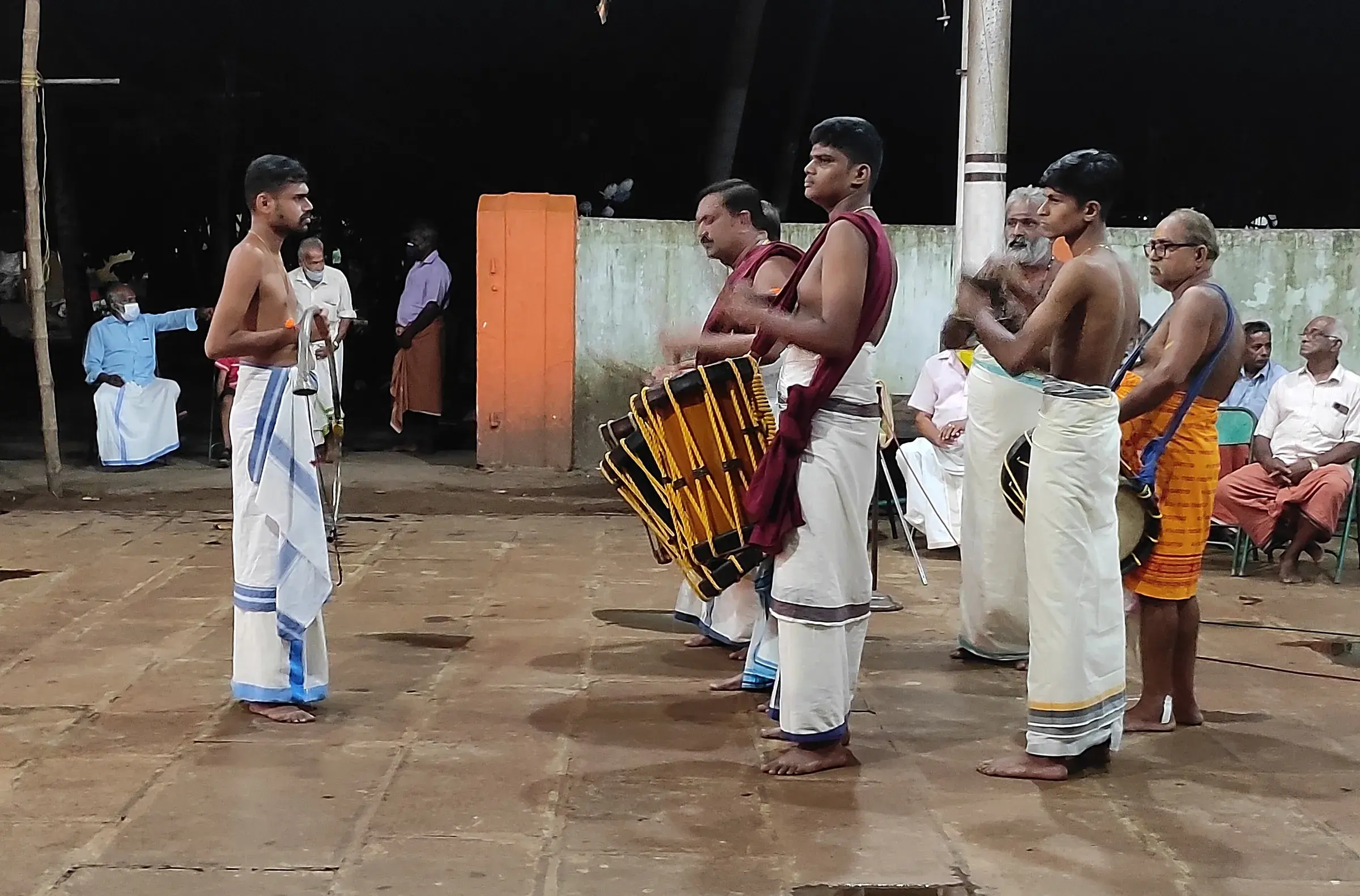
Chenda drummers performing in a row

Photo: Vis M · CC BY-SA 4.0

The drums

ചെണ്ടമേളം

Chenda melam

Rows of chenda drummers, backed by cymbals and horns, build ensembles that last for hours. The pandi and panchari melams are the heartbeat of every temple festival.

  • The Ilanjithara melam at Thrissur Pooram brings together more than two hundred musicians.
  • Panchavadyam, the 'five-instrument orchestra', is another cornerstone of festival music.

02 · Festivals

The year in celebrations

Kerala's calendar follows the harvest, the monsoon and the temple year — and every festival is shared across communities.

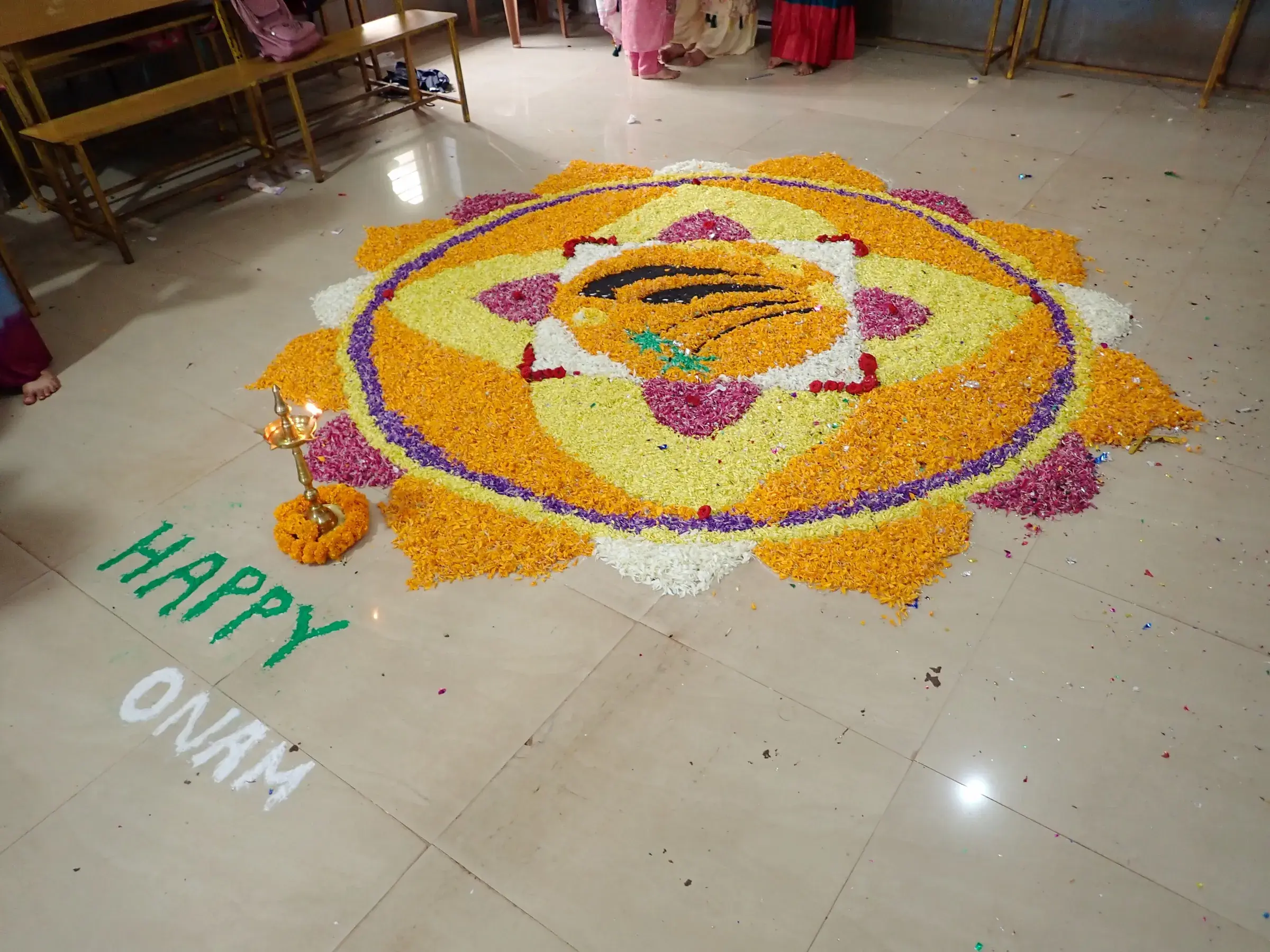
A circular flower carpet (pookalam) made for Onam

ഓണം

Onam

The homecoming of a king

Kerala's great harvest festival, in the month of Chingam (August–September), welcomes back the legendary king Mahabali, under whose rule everyone was equal. For ten days, from Atham to Thiruvonam, homes are decorated with flower carpets.

  • — The pookalam grows larger each day of the festival.
  • — Onam brings the sadya, boat races, Pulikali tiger dances and new clothes.
  • — Celebrated by Malayalis of every faith.

Photo: Shreesha Sharma · CC BY-SA 4.0

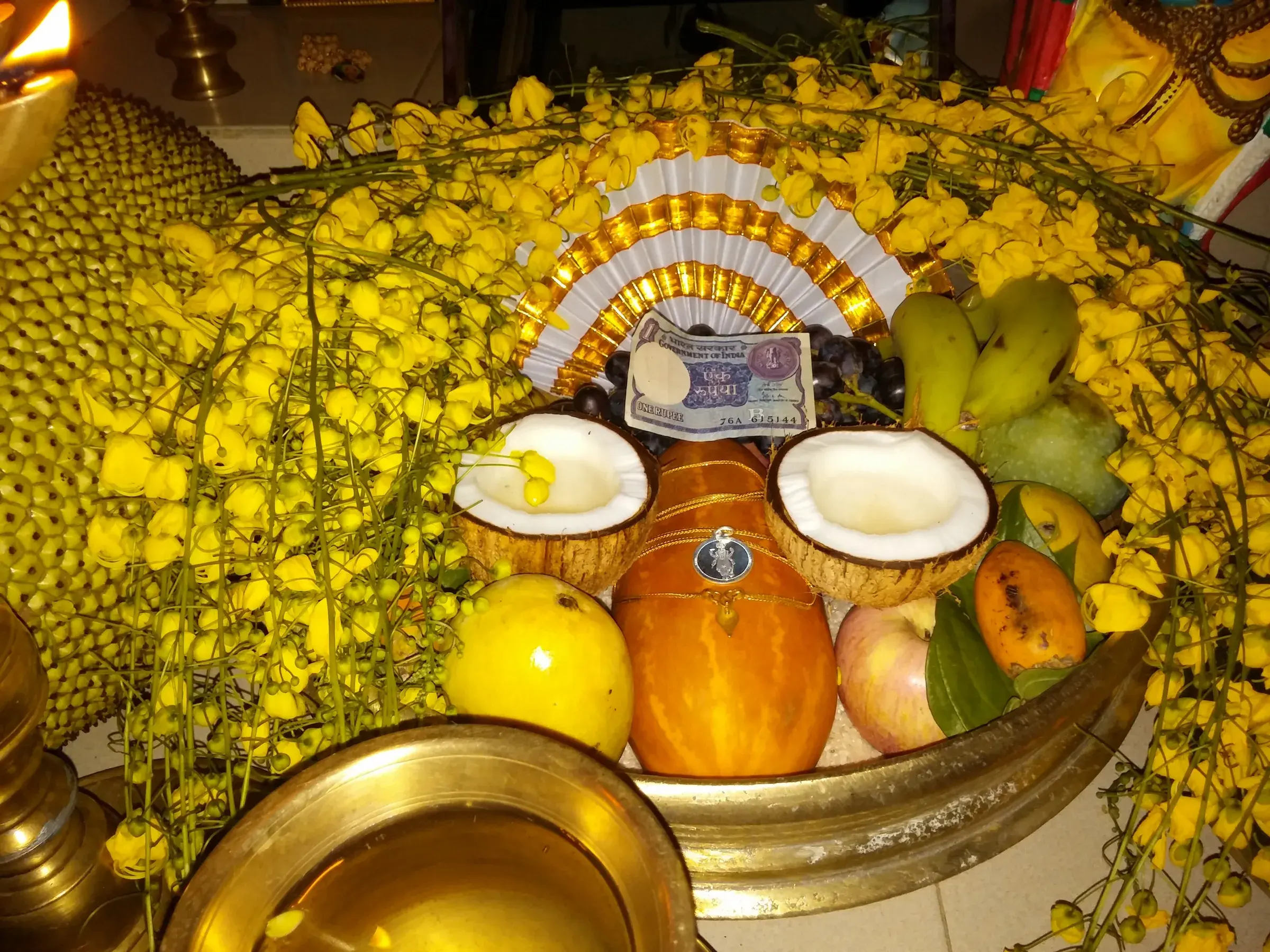
A Vishukkani arrangement of fruits, rice and a lamp

വിഷു

Vishu

The first sight of the year

The Malayalam new year, in mid-April. Families wake before dawn and open their eyes to the Vishukkani — an arrangement of rice, fruit, gold, a mirror, a lamp and golden konna flowers — believed to bring prosperity for the year.

  • — Elders give children money as Vishukkaineettam.
  • — The konna (Cassia fistula), Kerala's state flower, blooms just in time.

Photo: Vishnu Kunnathully · CC BY-SA 4.0

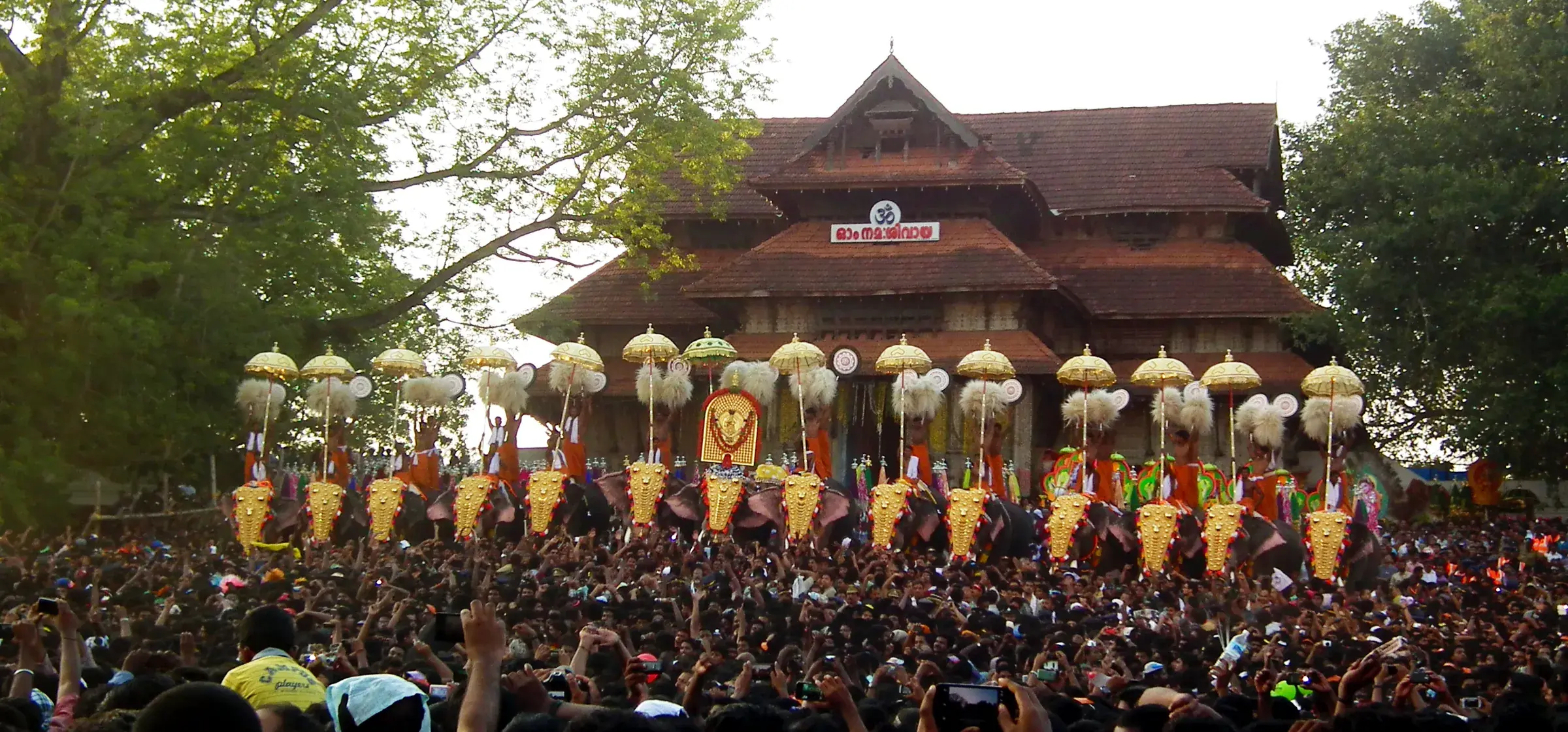
Elephants with sequinned parasols at Thrissur Pooram

തൃശ്ശൂർ പൂരം

Thrissur Pooram

The festival of festivals

Started by Sakthan Thampuran in 1798, the Pooram brings temples together on Thekkinkadu Maidan. Rival processions of caparisoned elephants face each other and compete in the kudamattam, a fast exchange of colourful parasols.

  • — Held in the month of Medam (April–May).
  • — The night ends with a famous display of fireworks.

Photo: Rameshng · CC BY-SA 3.0

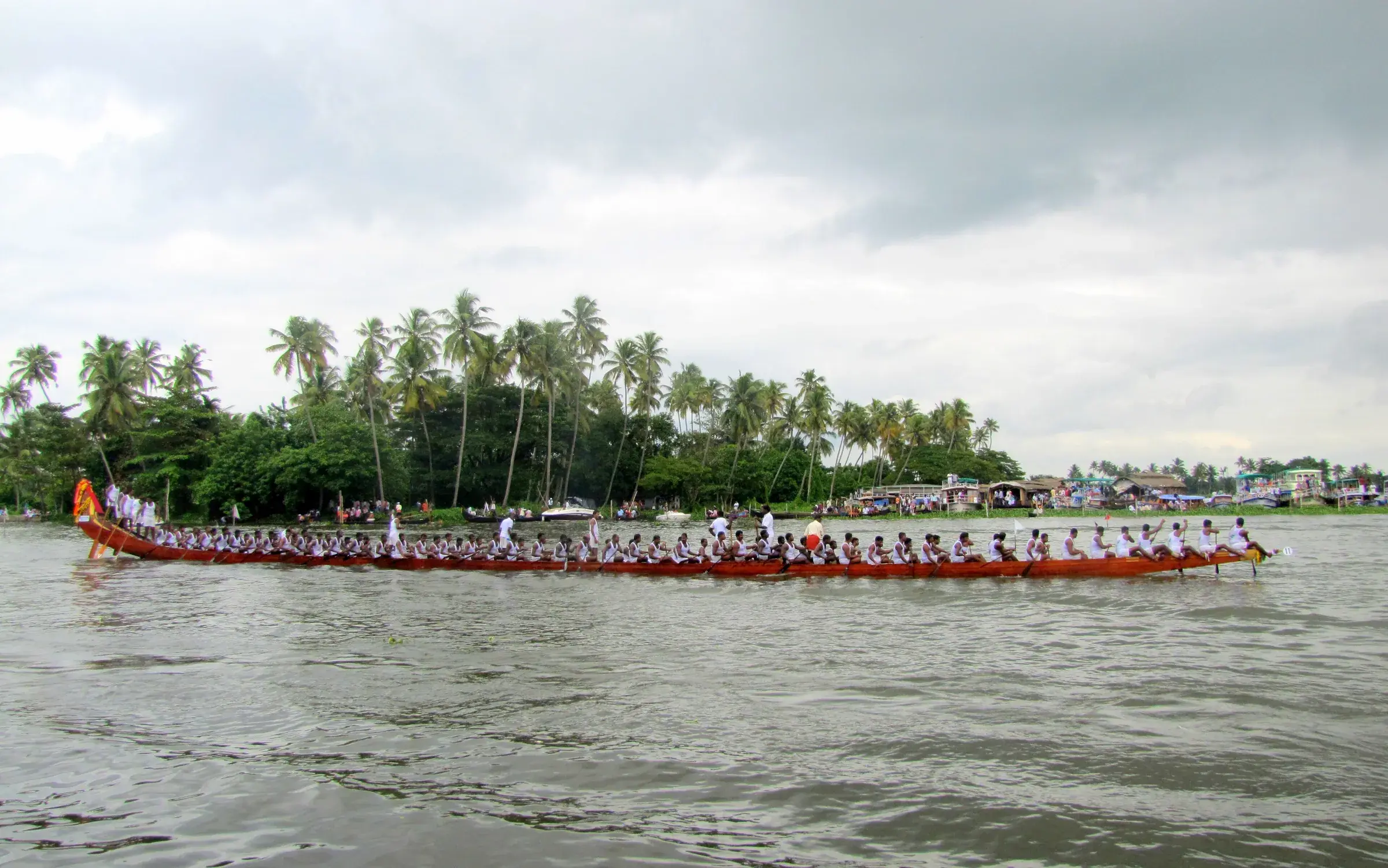
Snake boats racing with long rows of oarsmen

വള്ളംകളി

Vallam kali

The snake-boat races

Chundan vallams, snake boats more than thirty metres long, are rowed by over a hundred oarsmen singing vanchipattu. The races are village pride on water.

  • — The Nehru Trophy race on Punnamada Lake has been held since 1952.
  • — Aranmula's Uthrattathi Vallamkali is more ritual procession than race.

Photo: Manoj Karingamadathil · CC BY-SA 3.0

03 · The Kerala table

Coconut, rice, pepper and the catch of the day — with flavours carried in by every trader who ever landed on this coast.

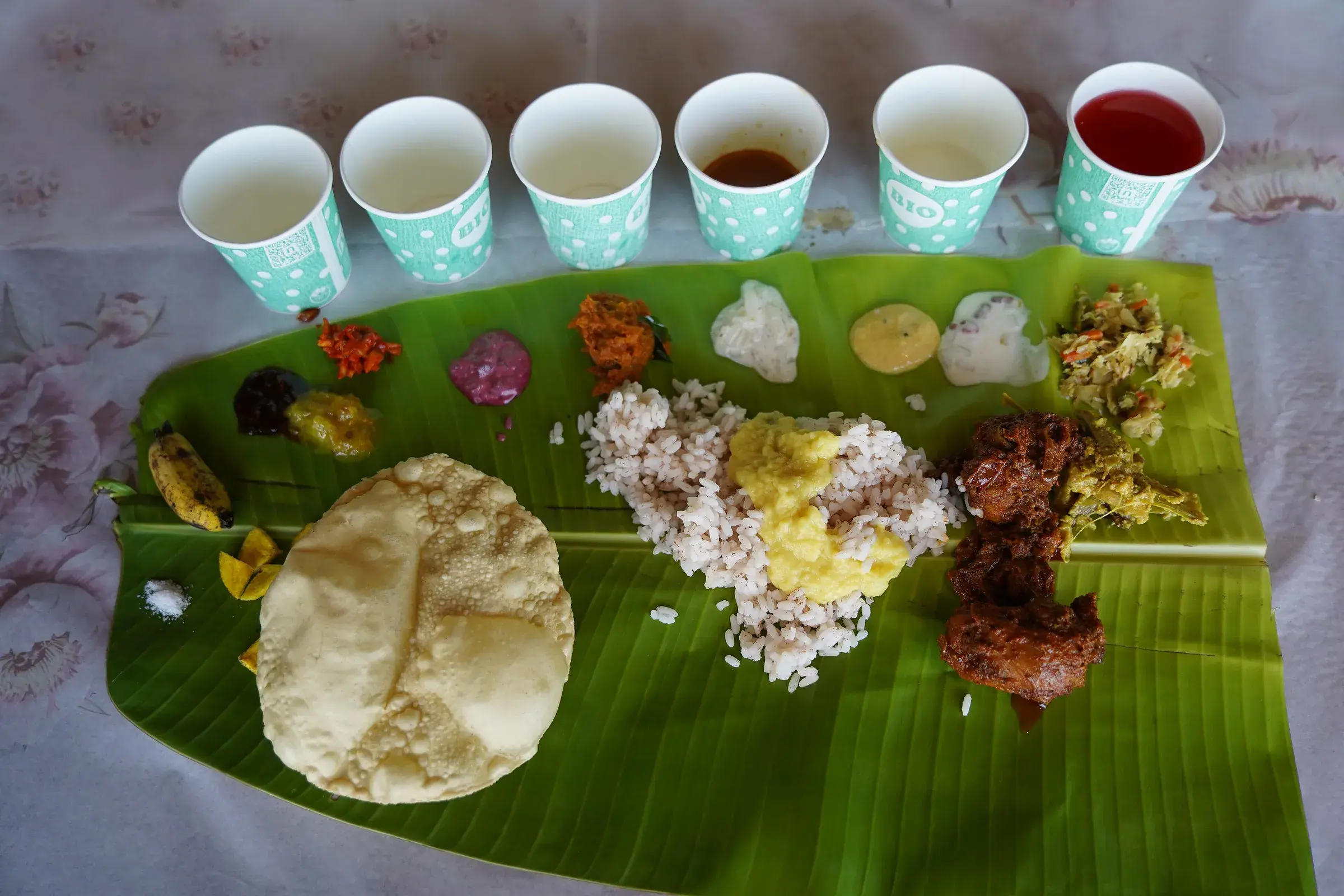
An Onam sadya served on a banana leaf

Photo: Gangulybiswarup · CC BY 4.0

സദ്യ

Sadya

The banana-leaf feast

A vegetarian feast of more than twenty dishes — avial, thoran, olan, kalan, sambar, pickles, banana chips and several payasams — served in a set order on a banana leaf and eaten by hand.

  • The centrepiece of Onam, weddings and temple festivals.
  • Folding the leaf toward you at the end means you enjoyed the meal.
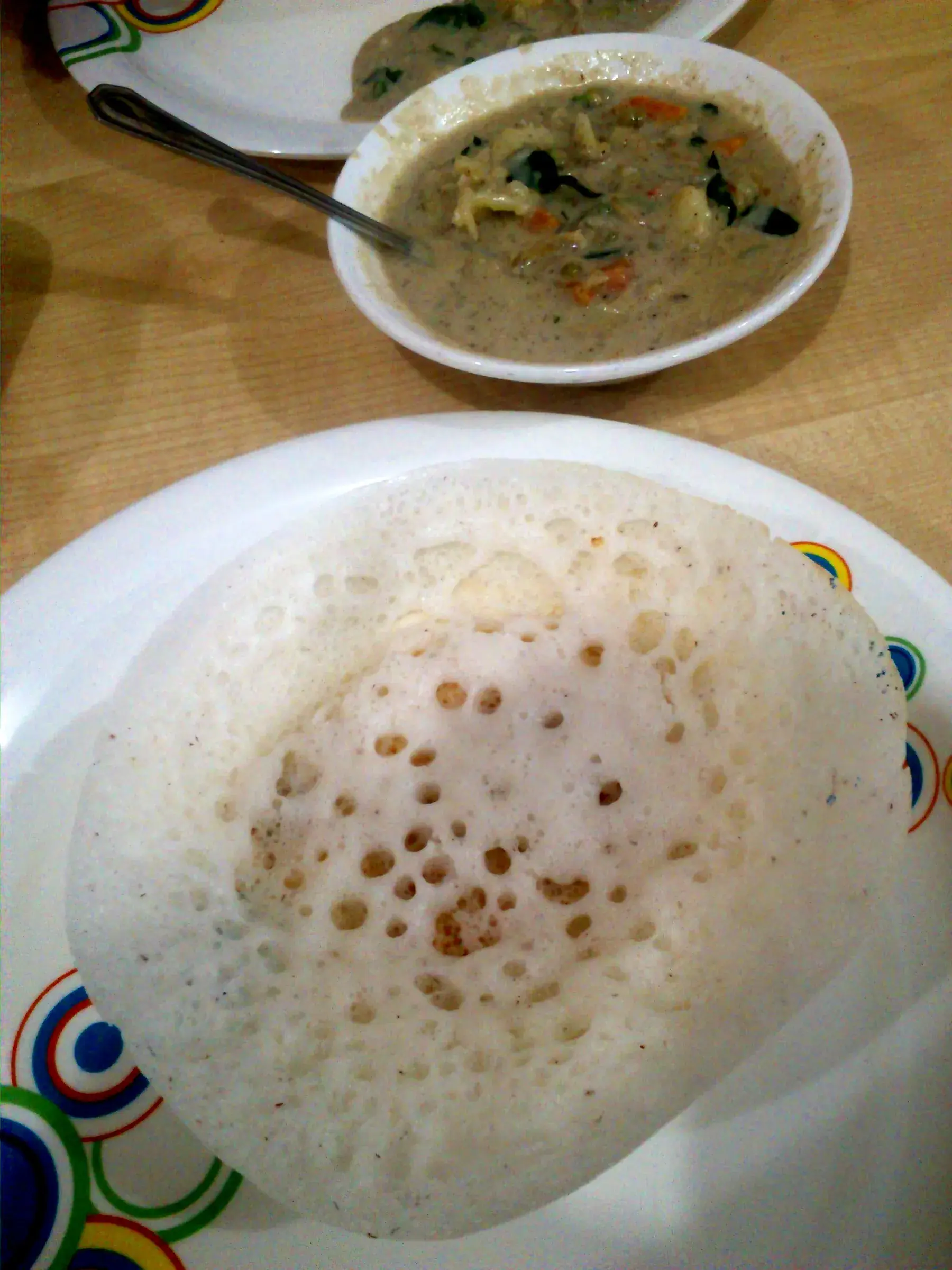
Appam served with a vegetable stew

Photo: Pranchiyettan · CC BY-SA 2.5 in

പുട്ട്, അപ്പം

Puttu, appam & stew

Breakfast

Puttu is rice flour and coconut steamed in a cylinder, eaten with black chickpea curry or banana. Appam, a lacy fermented rice pancake, is paired with a coconut-milk stew.

  • A favourite combination in central Kerala homes.
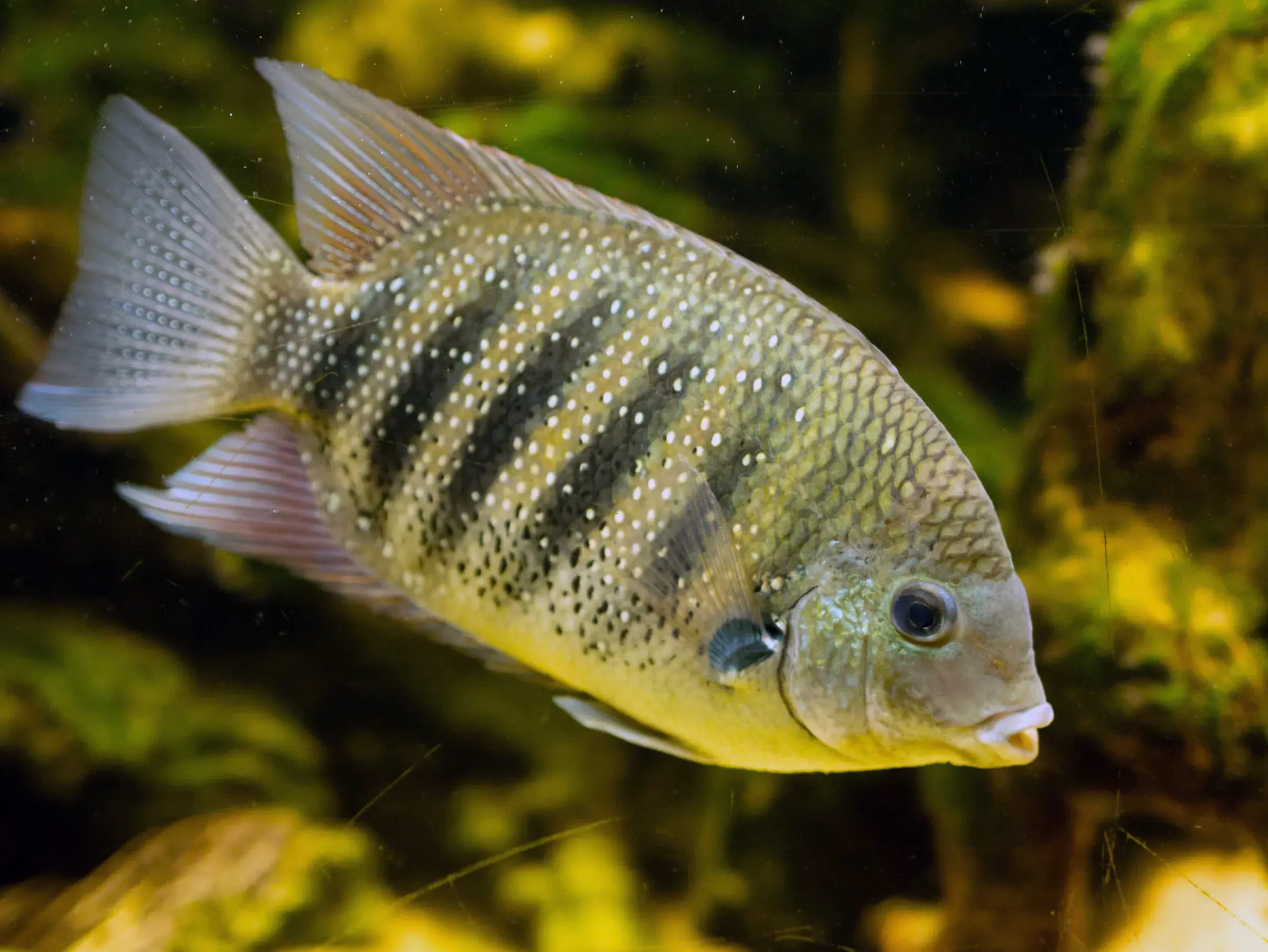
A green chromide (pearl spot) fish

Photo: Peter Corbett · CC BY 2.0

കരിമീൻ

Karimeen

The state fish

The pearl spot of the backwaters, Kerala's state fish, is best known as karimeen pollichathu — marinated, wrapped in banana leaf and roasted.

  • Look for it in toddy shops and houseboats around Vembanad Lake.

04 · Healing & ritual

Ancient knowledge of the body, and the quiet light that begins every auspicious act.

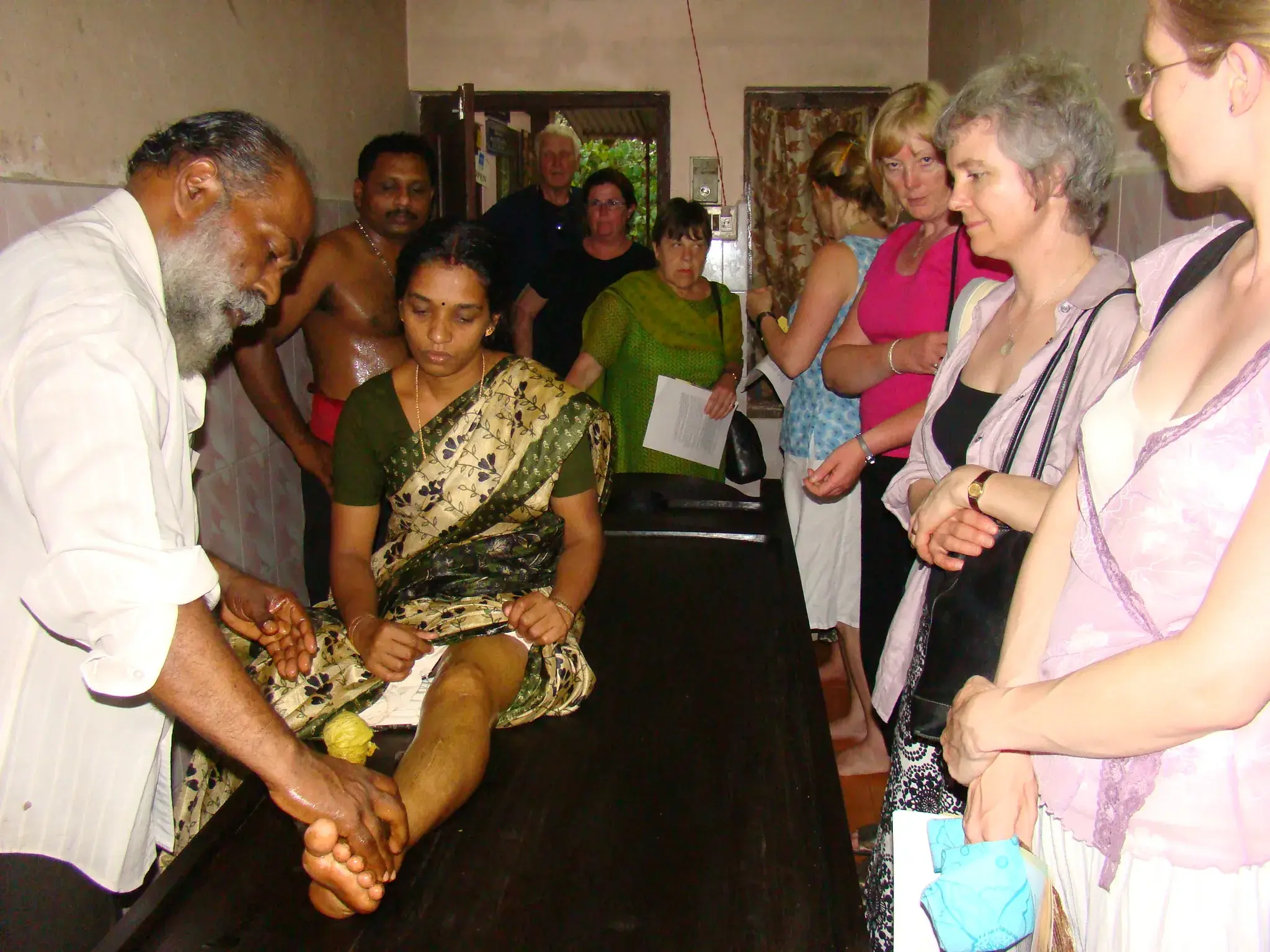
A kizhi treatment with herbal poultices

Photo: Gurukkal · Public domain

ആയുർവേദം

Ayurveda

The science of life

Kerala kept Ayurveda alive through families of physicians such as the Ashtavaidyas, and through institutions such as the Arya Vaidya Sala at Kottakkal. Treatments use herbal oils, massage and diet.

  • The monsoon month of Karkidakam is traditionally considered the best season for rejuvenation therapy.
  • Kizhi (herbal poultice massage) and dhara (a stream of oil on the forehead) are signature therapies.
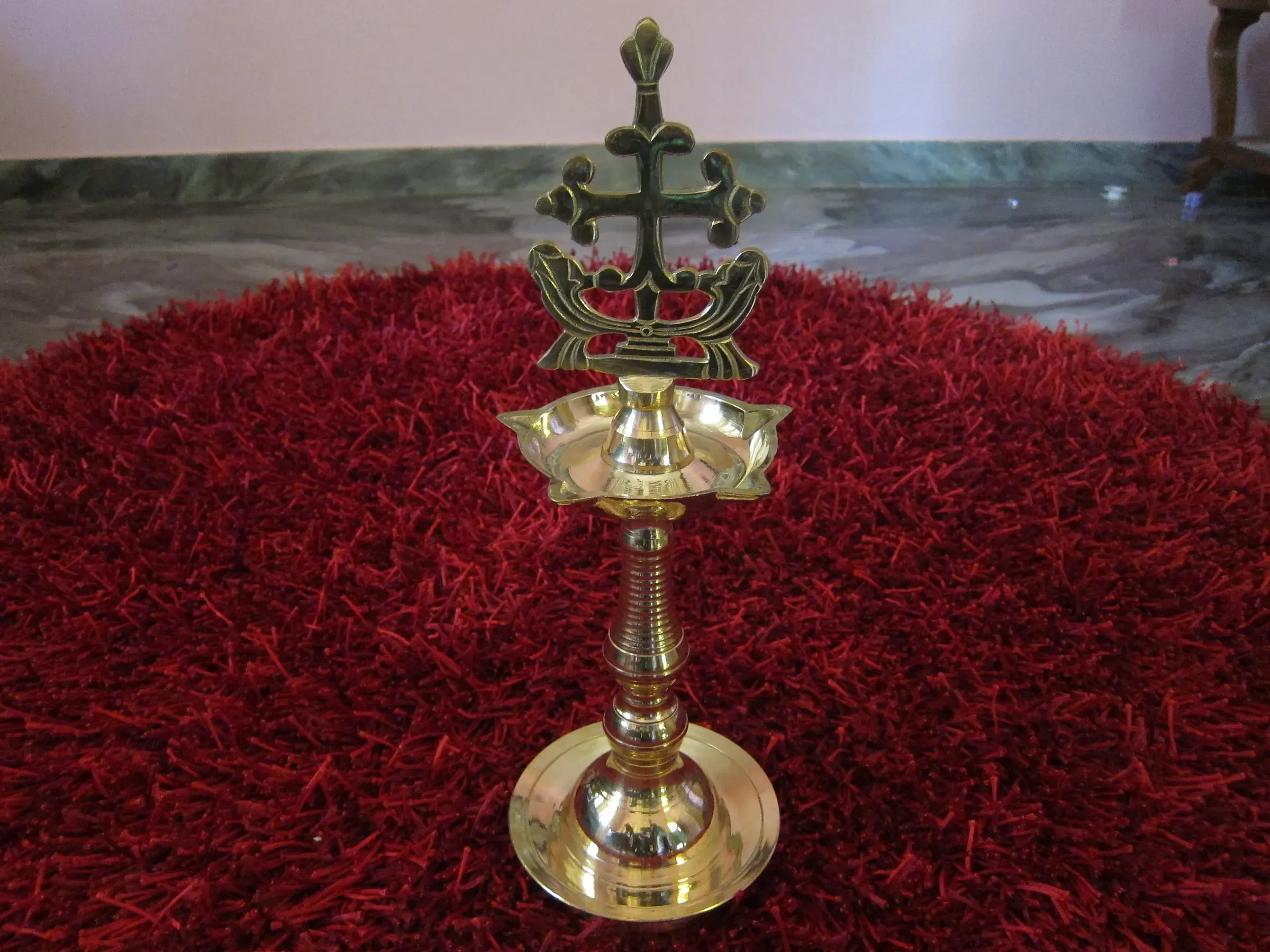
A brass nilavilakku oil lamp

Photo: Shijan Kaakkara · CC BY-SA 4.0

നിലവിളക്ക്

Nilavilakku

The lamp

The tall bronze oil lamp lit at dusk in homes and at the start of every ceremony, performance and celebration. Its flame opens this website, too.

  • Wicks are set facing east and west, and the lamp is never blown out — it is fanned or pinched.