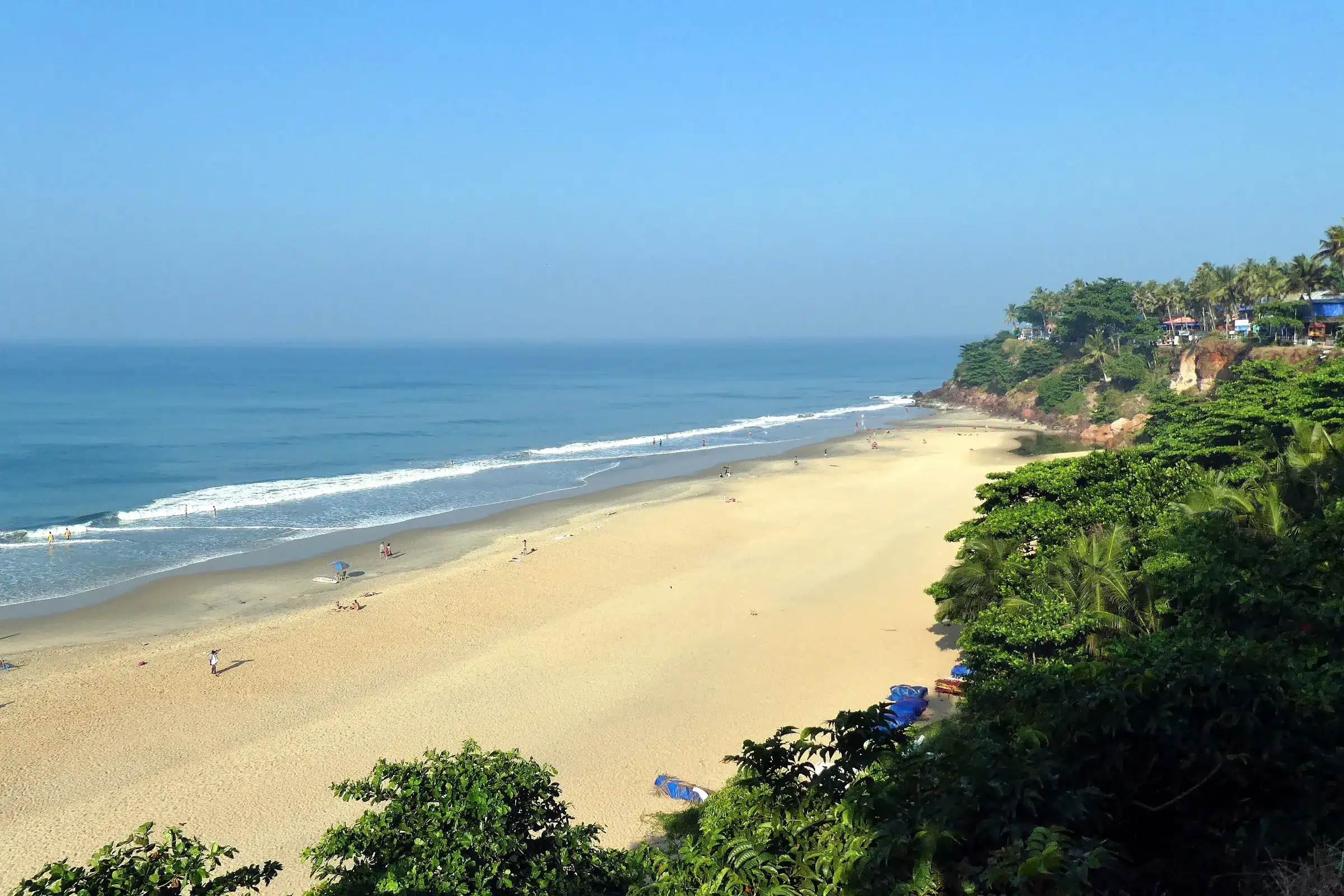
Red laterite cliffs above the curving beach at Varkala

District 01 of 14

തിരുവനന്തപുരം

Thiruvananthapuram

The city of the sacred serpent, where Kerala begins.

Quick facts

Kerala's southernmost district and its capital: a royal city of temple towers and palaces, cliff-top beaches, and forested hills that climb toward the Agasthyamala range.

Formed

1 July 1949

As Trivandrum district of Travancore–Cochin; part of Kerala since 1 November 1956

Headquarters

Thiruvananthapuram

Area

2,192 km²

Population

33,01,427

Census of India 2011

Known for

  • State capital
  • Padmanabhaswamy Temple
  • Kovalam & Varkala
  • Technopark

History

The story of Thiruvananthapuram

The name means the city of Anantha, the thousand-headed serpent on whom Vishnu reclines as Padmanabha. For centuries the region belonged to the Ay chieftains and then to Venad, a small coastal kingdom whose rulers would one day redraw the map of southern Kerala.

That transformation came with Marthanda Varma, who between 1729 and 1758 swallowed his rivals to forge the kingdom of Travancore. In 1750 he dedicated the entire realm to Sree Padmanabha and thereafter ruled as the deity's servant, Padmanabhadasa. In 1795 his successor, Karthika Thirunal Rama Varma, moved the capital from Padmanabhapuram to Thiruvananthapuram, and the temple town became a royal city.

The nineteenth century turned it into a seat of learning. Swathi Thirunal, the composer-king, founded an observatory and an English school that grew into University College, while his successors added hospitals, a public library, the zoo of 1857 and the Napier Museum, completed in 1880. On 12 November 1936 Sree Chithira Thirunal issued the Temple Entry Proclamation, opening Travancore's temples to Hindus of every caste — a landmark of Indian social reform.

The city became capital of Travancore–Cochin in 1949 and of the new state of Kerala in 1956. In 1990 it opened Technopark, India's first technology park, and in 2025 the deep-water port at Vizhinjam was commissioned a few kilometres from Kovalam's beaches — a reminder that this coast has always looked outward to the sea.
Places to visit

7 places in Thiruvananthapuram

Seasons are a guide: the south-west monsoon arrives in June and the north-east rains in October–November.

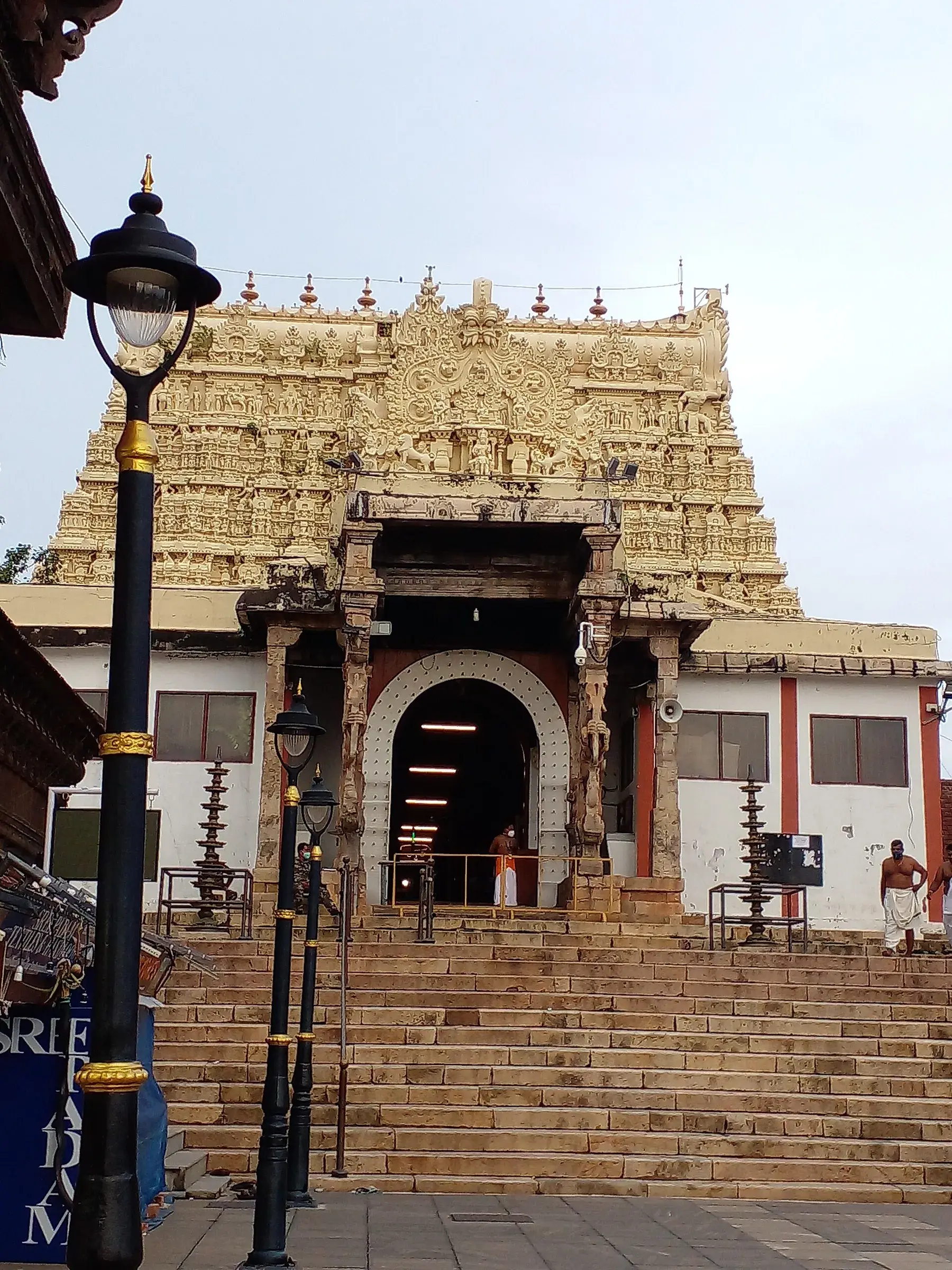
  1. The tall seven-tiered gopuram of the Padmanabhaswamy Temple
    Temple
    01

    Sree Padmanabhaswamy Temple

    Behind the seven-tiered gopuram lies an image of Vishnu reclining on Anantha, so long it is viewed through three doors. The temple was the heart of the Travancore state, and the treasure inventoried in its vaults from 2011 made headlines worldwide. Entry is for Hindus only, with a strict traditional dress code.

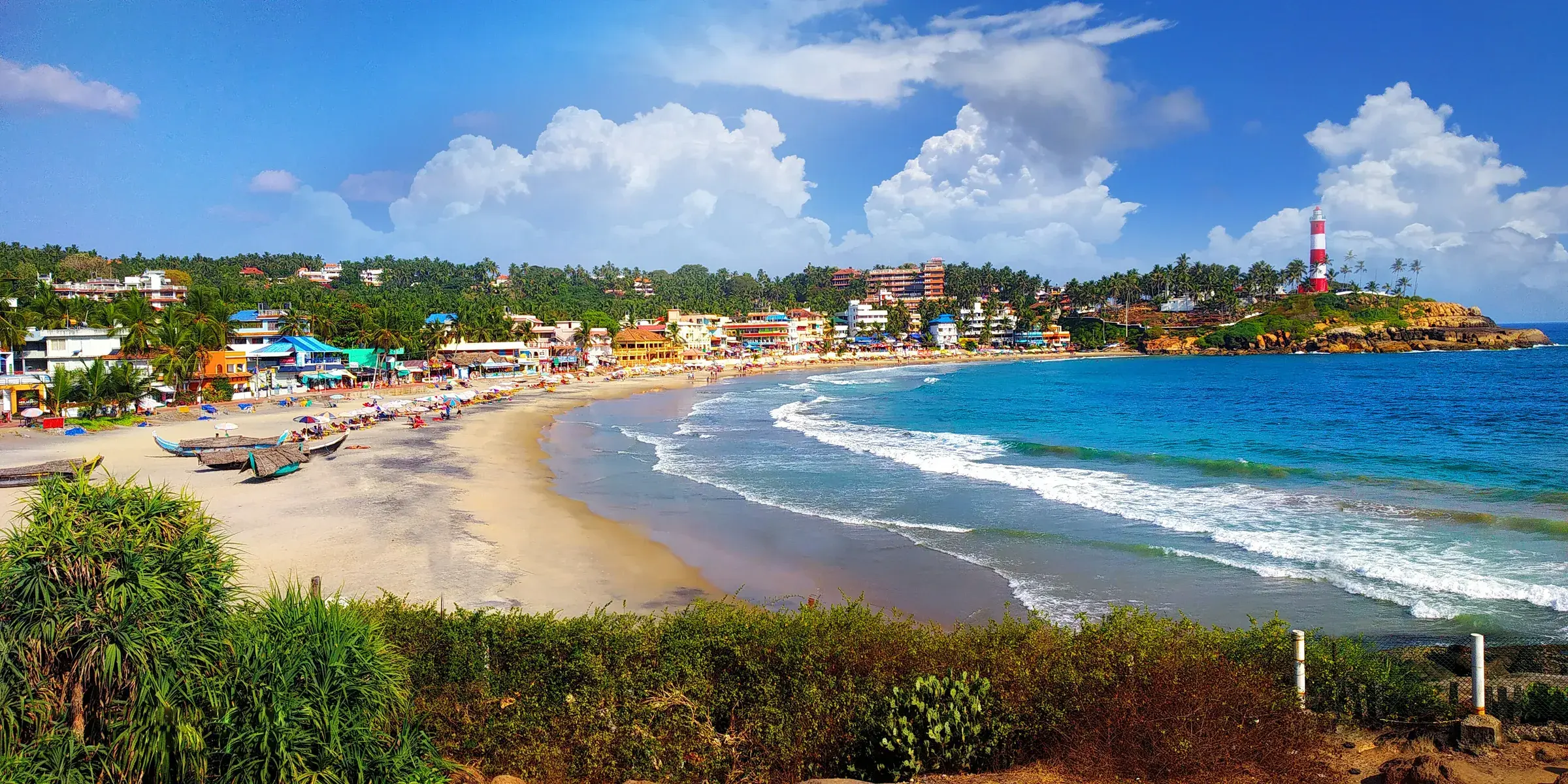
  2. Waves breaking on the crescent beach of Kovalam
    Beach
    02

    Kovalam

    Three crescent coves — Lighthouse, Hawa and Samudra — separated by rocky headlands. The red-and-white lighthouse on Kurumkal hill gives the best view of the bays, and fishing boats still land their catch at dawn.

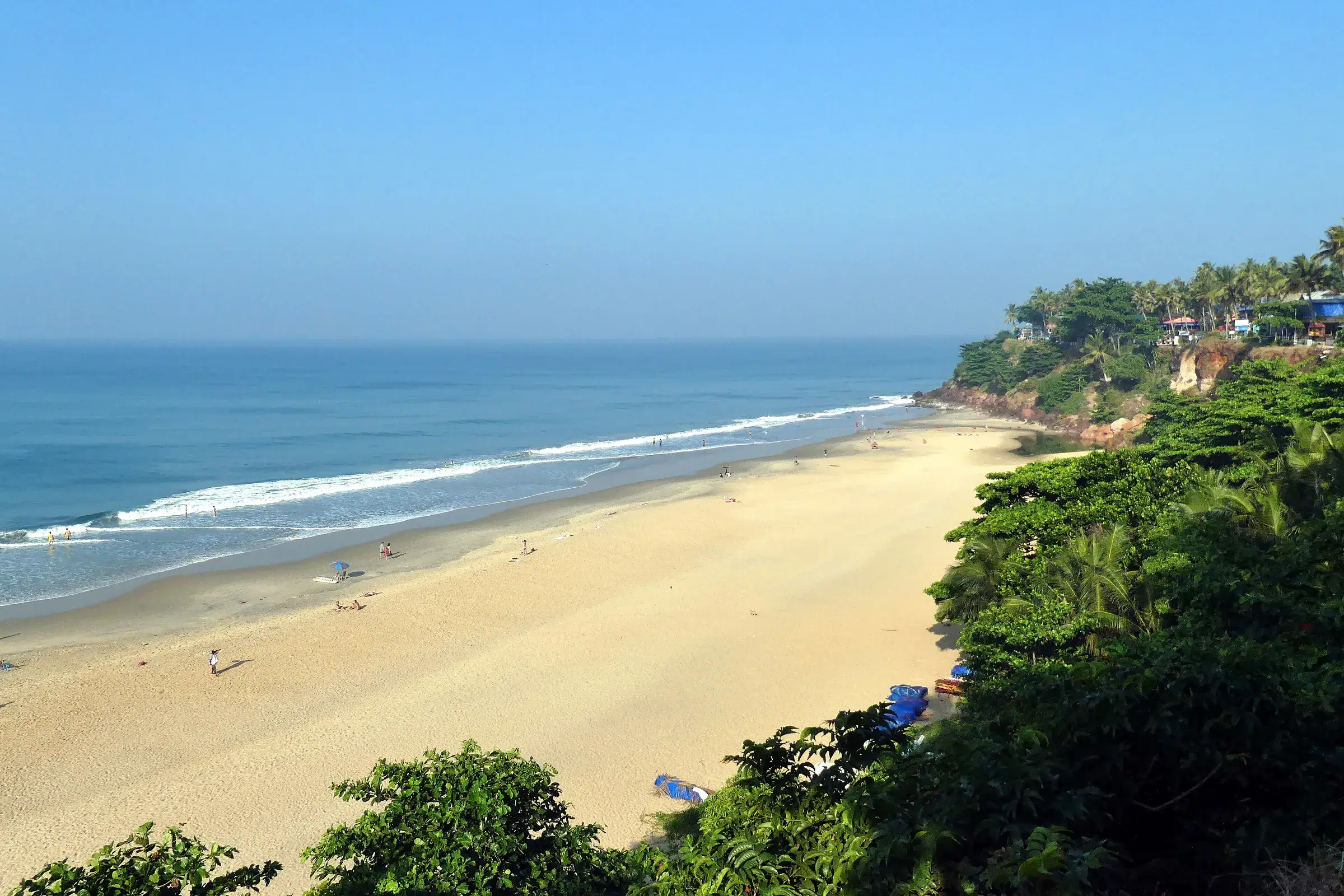
  3. Varkala beach seen from the top of the cliff
    Beach
    03

    Varkala Cliff

    Sheer laterite cliffs, declared a National Geological Monument, drop to Papanasam beach, where pilgrims perform rites for their ancestors. Nearby stand the ancient Janardhana Swamy Temple and Sivagiri, where social reformer Sree Narayana Guru is laid to rest.

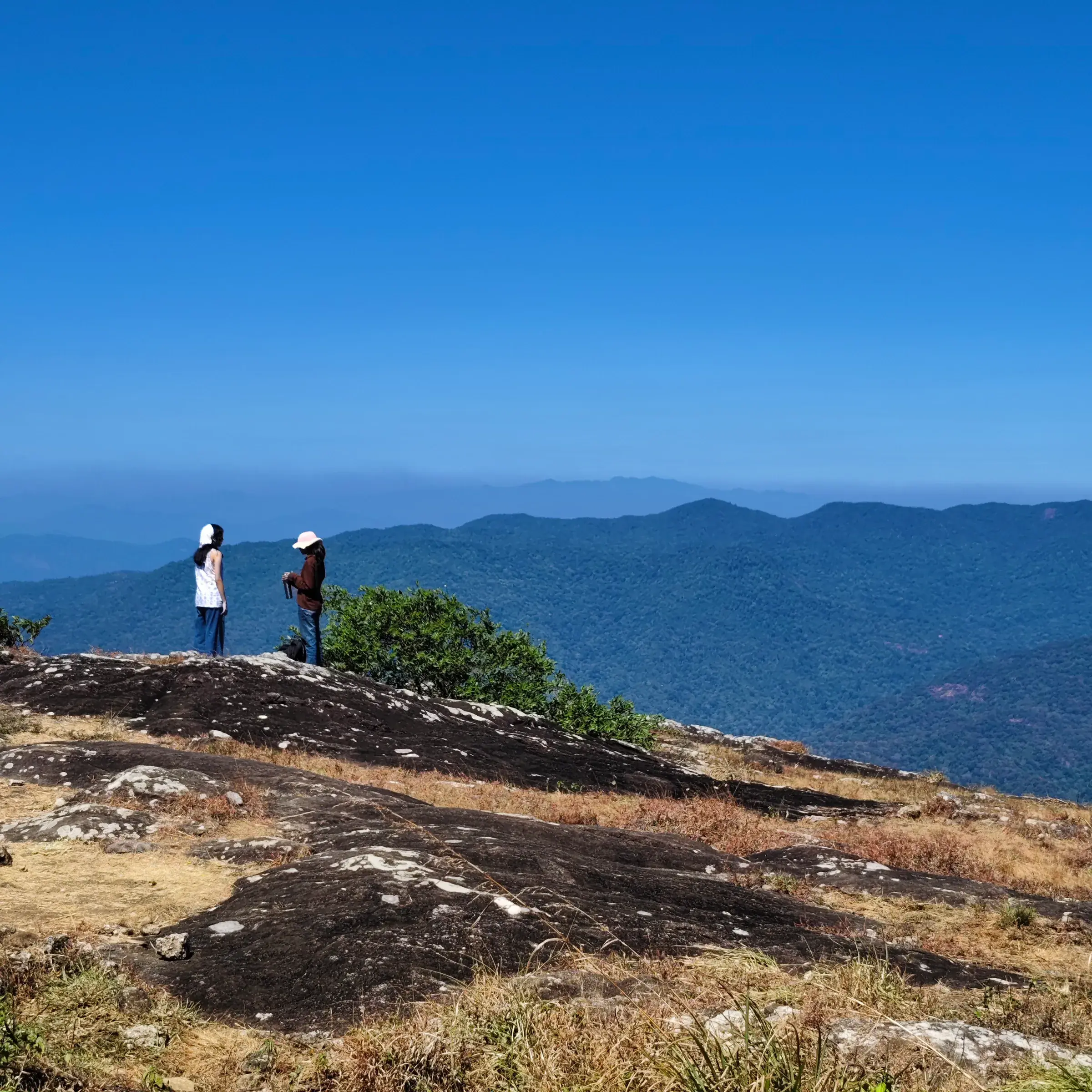
  4. Misty hills and tea slopes at Ponmudi
    Hills
    04

    Ponmudi

    The 'golden peak' rises to about 1,100 metres, reached by a road of twenty-two hairpin bends through forest and tea. Mist rolls in by afternoon, and on clear days the view reaches the Agasthyamala range.

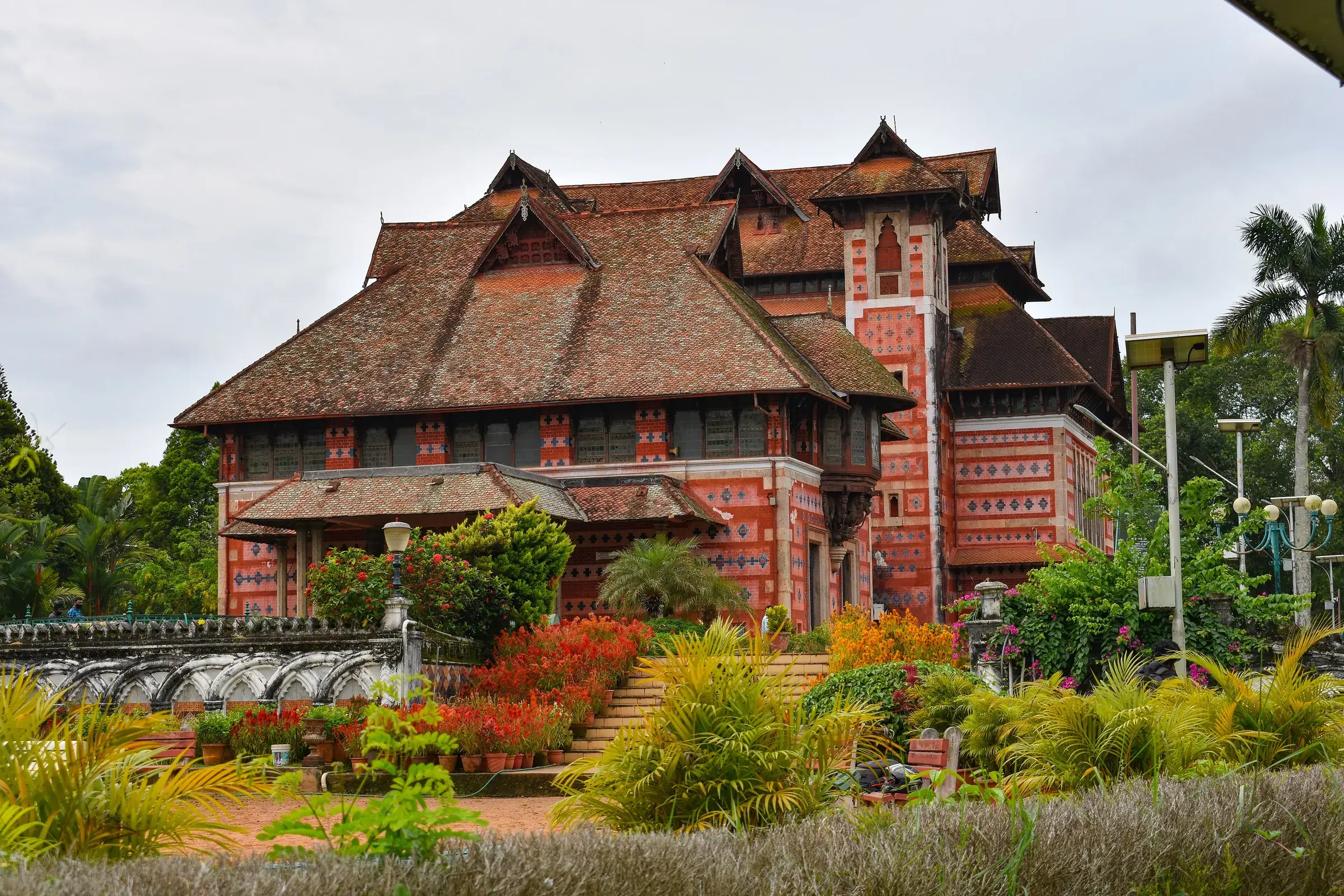
  5. The patterned brick façade and gabled roofs of the Napier Museum
    Heritage
    05

    Napier Museum

    An Indo-Saracenic jewel completed in 1880, with gabled roofs and a naturally ventilated hall of bronzes, temple carvings and ivory. The neighbouring Sree Chitra Art Gallery holds works by Raja Ravi Varma and Nicholas Roerich.

    Best time · Year-round (closed Mondays)

    Google Maps(opens Napier Museum in Google Maps, new tab)
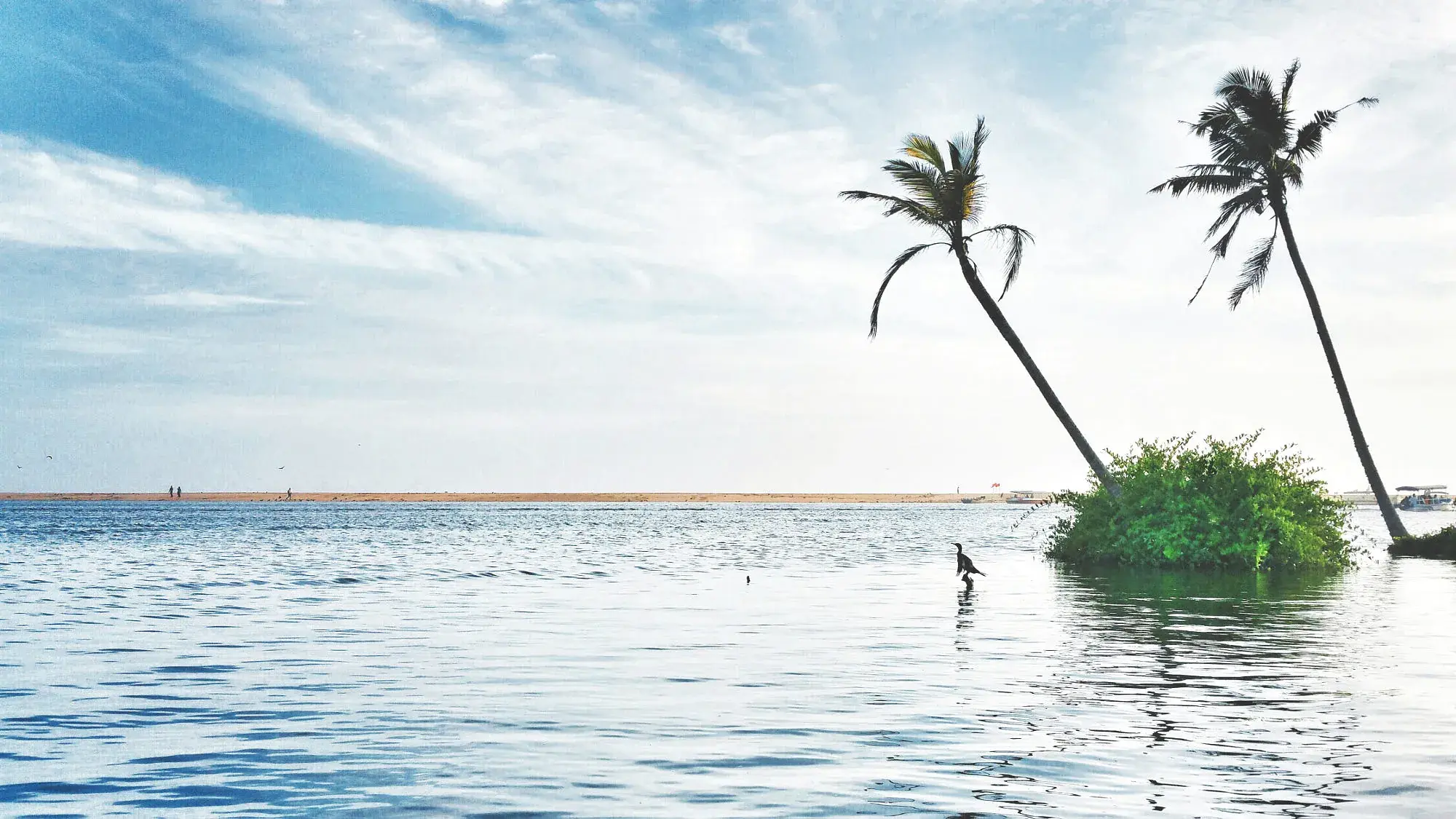
  6. Golden sandbar between the Neyyar estuary and the sea at Poovar
    Backwater
    07

    Poovar

    Near Kerala's southern tip, the Neyyar river meets the Arabian Sea across a thin golden sandbar. Boats drift through mangrove channels to the estuary, where backwater and surf lie side by side.

Taste, celebrate, perform

Food, festivals & art forms

ഭക്ഷണം

Food

  • Boli & paal payasam

    A saffron-tinted sweet flatbread eaten with milk payasam — the signature finish of a southern Kerala sadya.

  • Kappa & meen curry

    Boiled tapioca with fiery, kudampuli-soured fish curry; the comfort food of the coast.

  • Thiruvananthapuram sadya

    The southern style of the banana-leaf feast, known for its sweeter touch and generous payasams.

ഉത്സവങ്ങൾ

Festivals

  • Attukal Pongala

    Millions of women cook offerings of pongala in clay pots along the city's streets — recognised by Guinness as one of the largest gatherings of women anywhere.

  • Padmanabhaswamy Aarattu

    Twice a year the temple's deities are carried in royal procession to Shanghumukham beach for a ritual bath in the sea.

  • Navaratri

    Nine nights of Carnatic music at the Navaratri Mandapam beside the temple, a tradition associated with Swathi Thirunal.

കലകൾ

Art forms

  • Carnatic music

    Swathi Thirunal's compositions, in several languages, remain central to the city's concert stages.

  • Kathakali at Margi

    Margi, a renowned Kathakali and Koodiyattam school in the city, keeps classical training traditions alive.

  • Raja Ravi Varma

    The painter from nearby Kilimanoor whose oil paintings reshaped how Indian mythology was imagined.