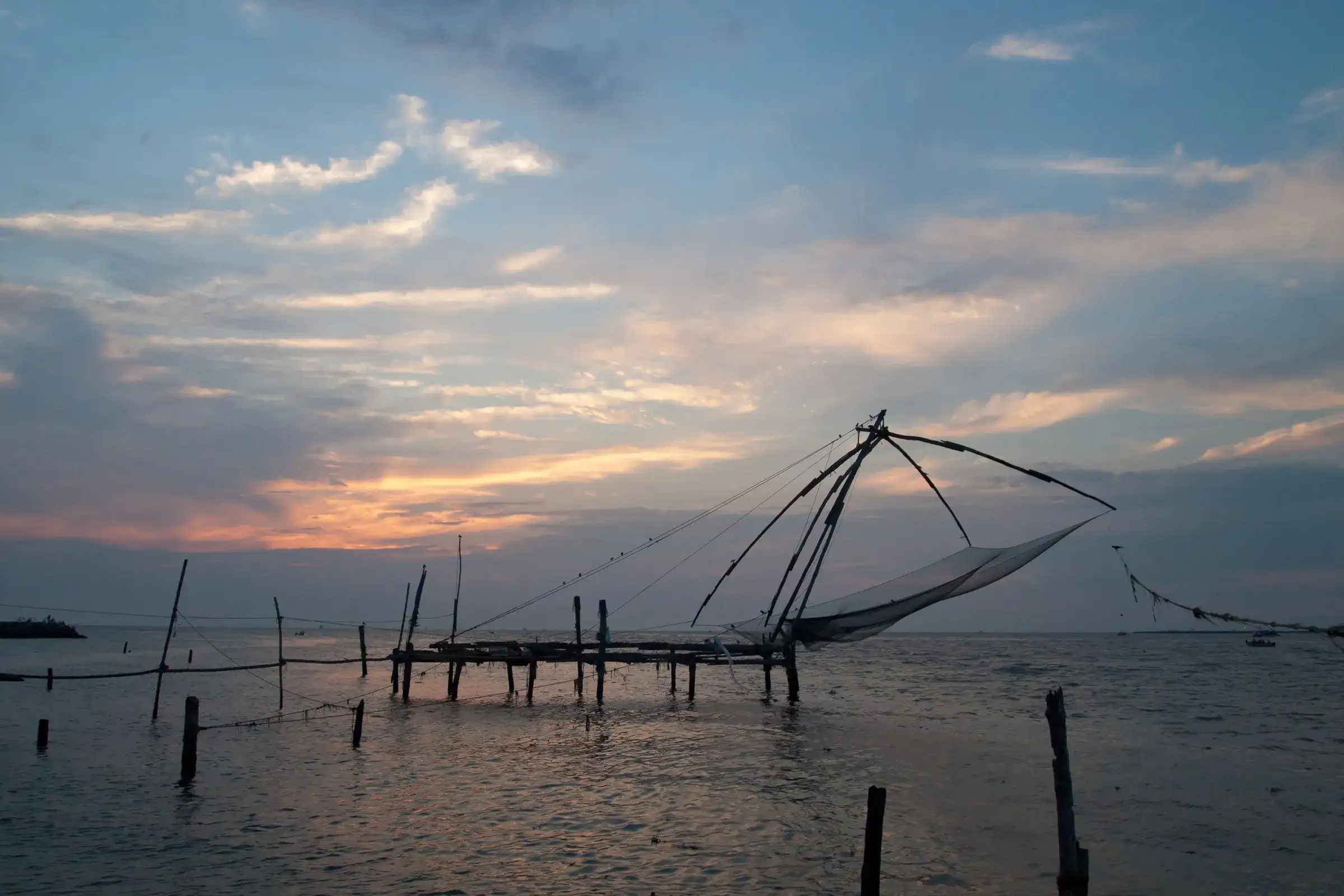
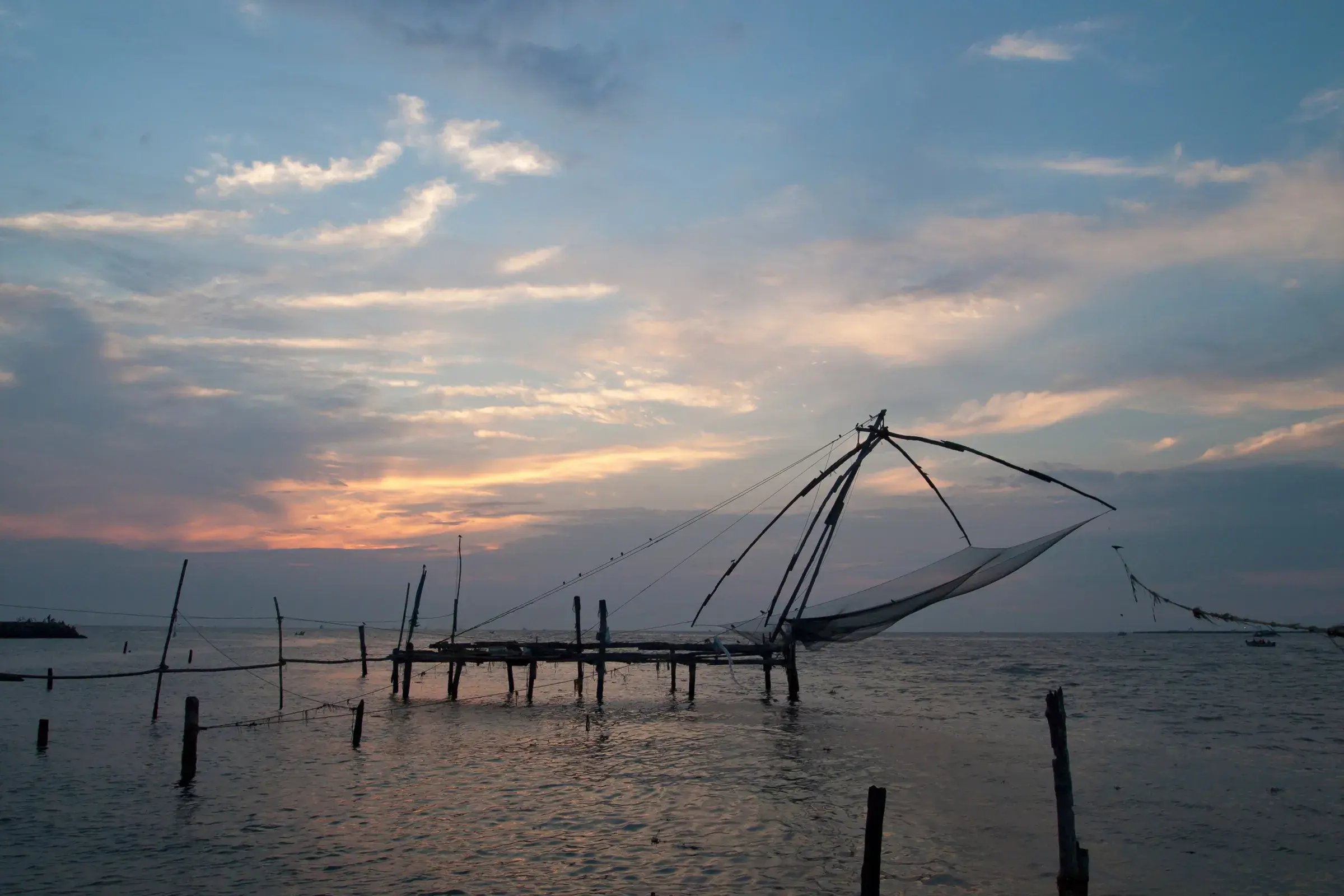
Chinese fishing nets silhouetted against the sunset at Fort Kochi

District 07 of 14

എറണാകുളം

Ernakulam

Queen of the Arabian Sea, where every ocean met.

Quick facts

Kerala's commercial capital and its most cosmopolitan corner, where Jewish, Portuguese, Dutch, British, Arab, Gujarati and Konkani histories share a few square kilometres of waterfront.

Formed

1 April 1958

Headquarters

Kakkanad

Area

3,068 km²

Population

32,82,388

Census of India 2011

Known for

  • Kochi port
  • Fort Kochi & Mattancherry
  • Kochi-Muziris Biennale
  • Solar-powered airport

History

The story of Ernakulam

Kochi owes its existence to a flood. In 1341 the Periyar burst its banks, silting up the ancient harbour of Muziris to the north and carving out a natural harbour at Kochi. The rulers of the Kingdom of Cochin moved their seat here, and the port drew traders from across the Indian Ocean.

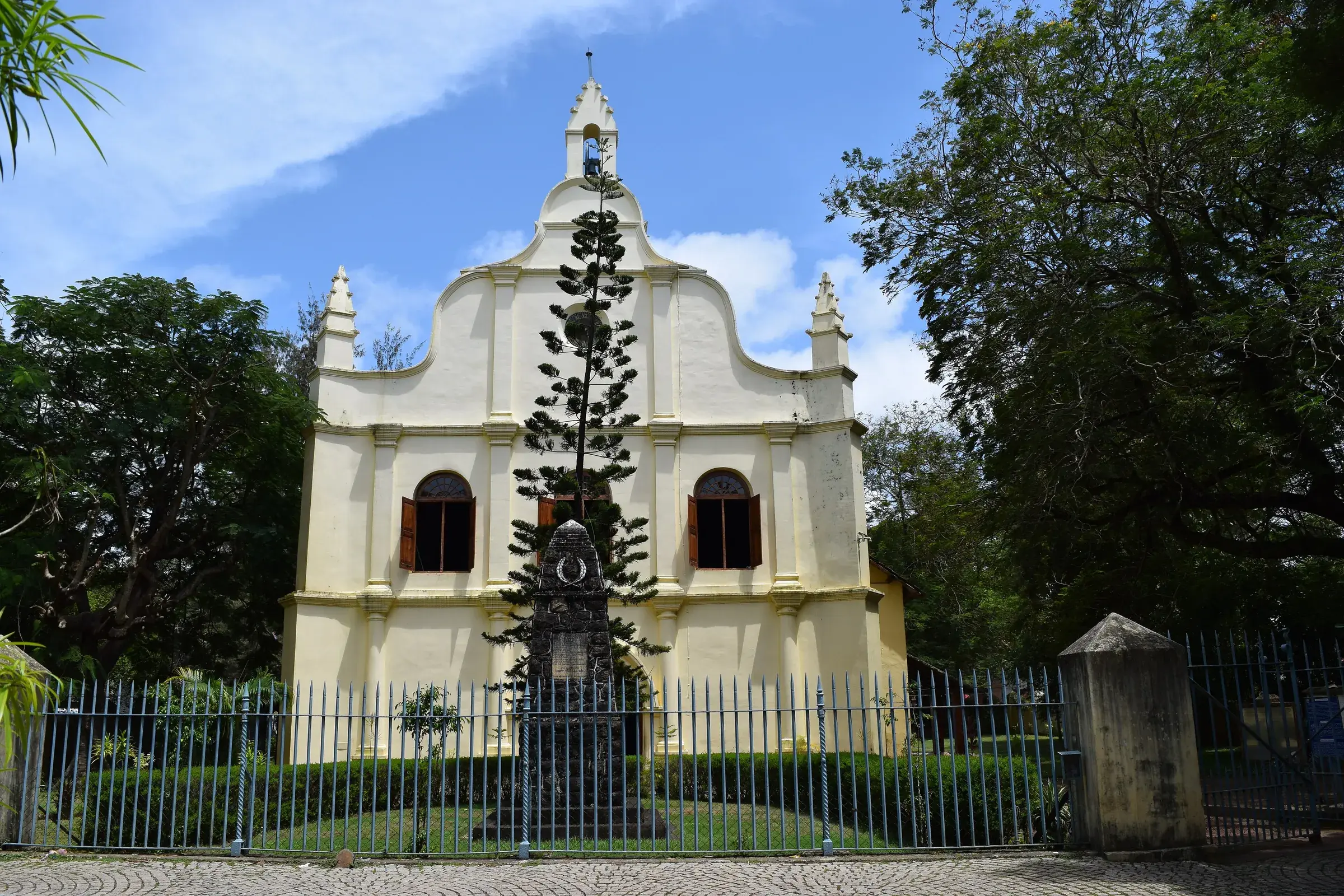
The Portuguese arrived in 1500 and in 1503 built Fort Manuel, the first European fort in India, along with the church now called St. Francis — the oldest European church in India. Vasco da Gama died in Kochi in 1524 and was buried there before his remains were taken home to Portugal. Around 1555 the Portuguese built a palace at Mattancherry for the Raja of Cochin, later renovated by the Dutch and known ever since as the Dutch Palace.

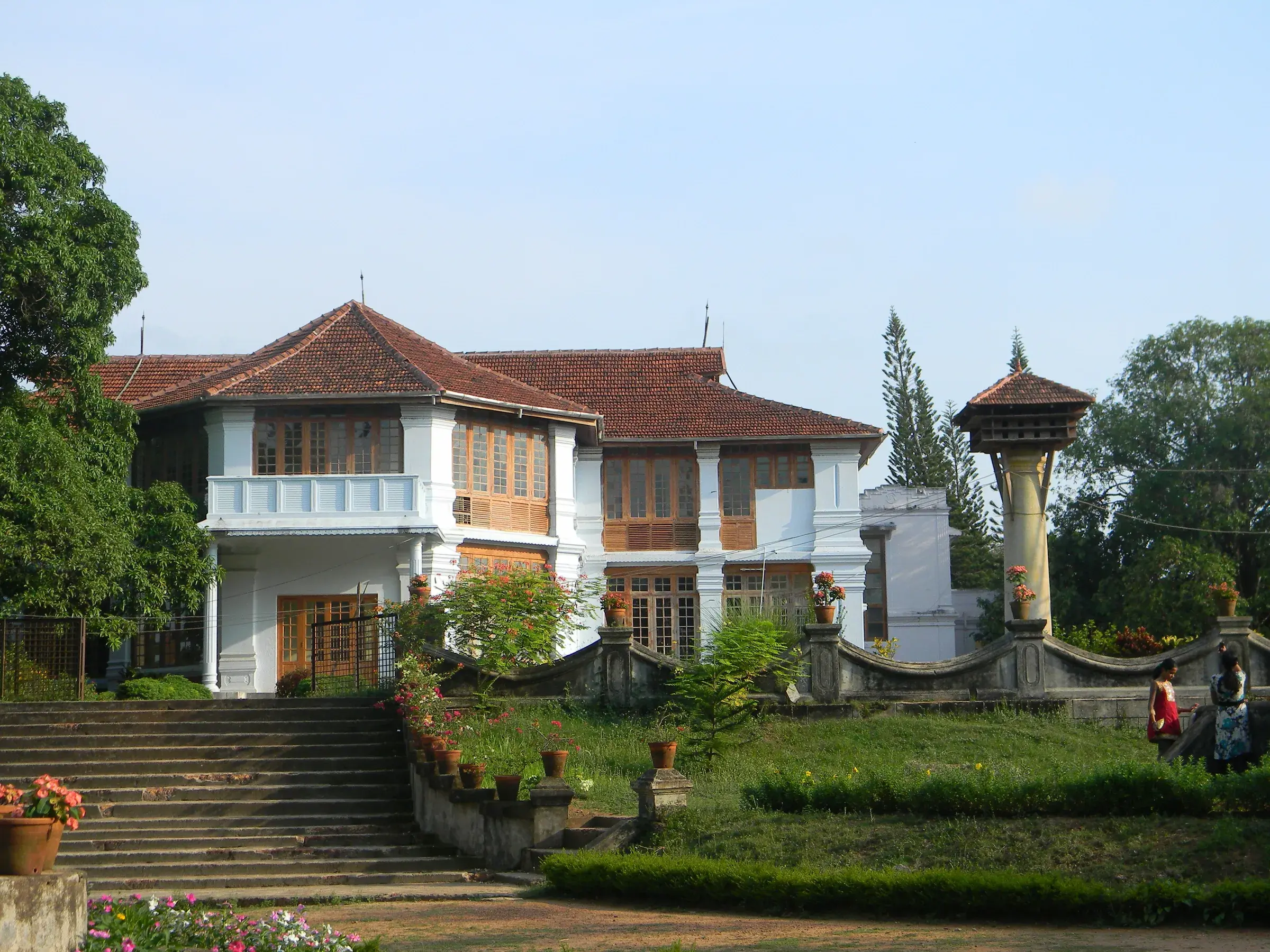
In 1663 the Dutch captured Kochi, and the British took control at the end of the eighteenth century. Through it all, the town's Jewish community thrived: the Paradesi Synagogue, built in 1568, is the oldest active synagogue in the Commonwealth. The royal family of Cochin built the Hill Palace at Thrippunithura in 1865.

In the 1920s and 30s, harbour engineer Robert Bristow dredged a new island, Willingdon Island, to create a modern deep-water port. The district was formed in 1958. Since then Kochi has added a shipyard, the Kochi-Muziris Biennale (first held in 2012), a metro (2017), and in 2015 the world's first fully solar-powered airport.
Places to visit

7 places in Ernakulam

Seasons are a guide: the south-west monsoon arrives in June and the north-east rains in October–November.

  1. Chinese fishing nets silhouetted at sunset on the Fort Kochi waterfront
    Heritage
    01

    Chinese Fishing Nets, Fort Kochi

    Huge cantilevered nets, lowered and raised by teams of fishermen using counterweights of stone. Tradition says they came with traders from China; whatever their origin, they have framed Kochi's sunsets for centuries.

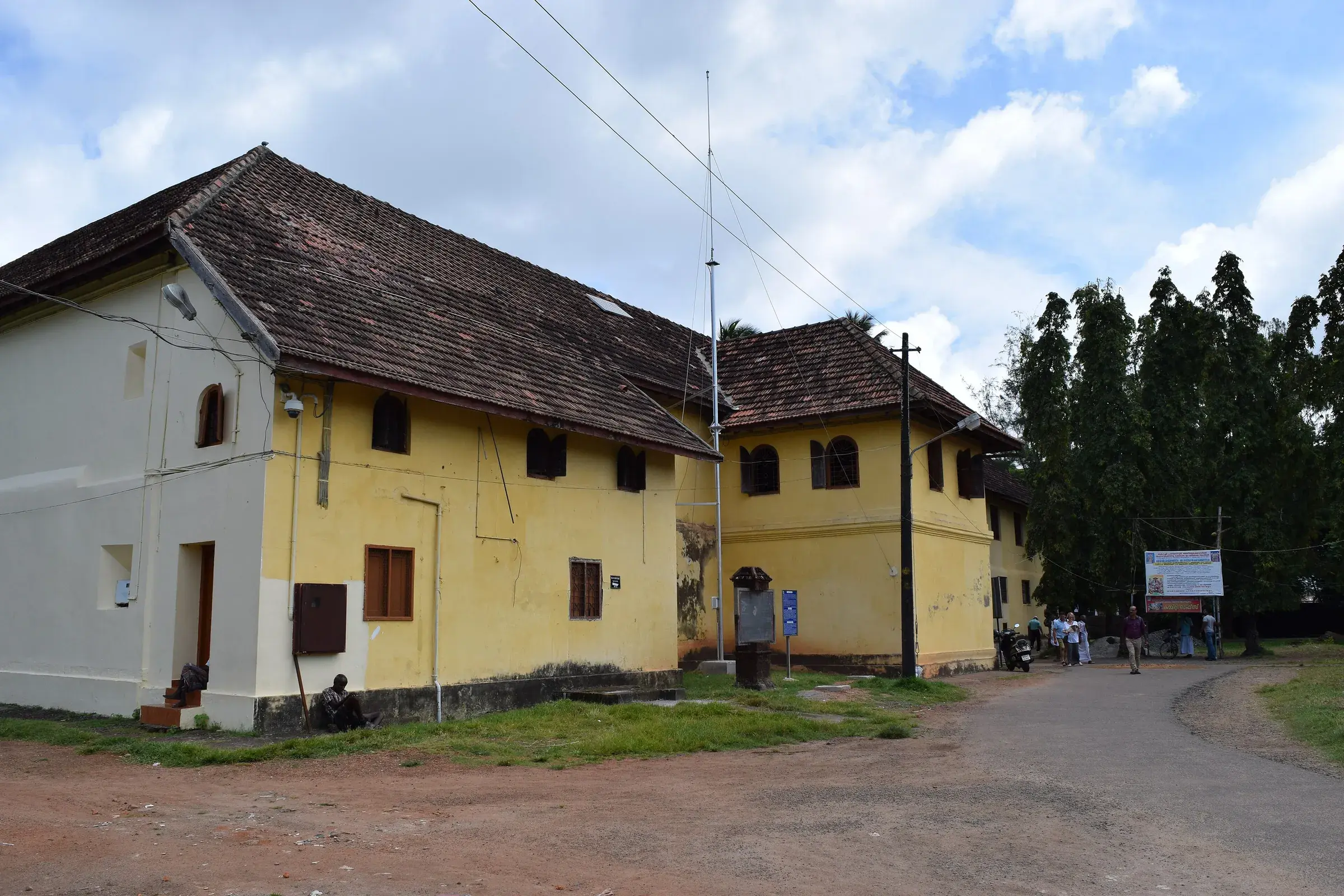
  2. The courtyard and buildings of Mattancherry Palace
    Heritage
    02

    Mattancherry Palace

    The 'Dutch Palace' hides some of India's finest temple-style murals, including whole episodes of the Ramayana painted across its walls, along with royal portraits and palanquins of the Cochin rajas.

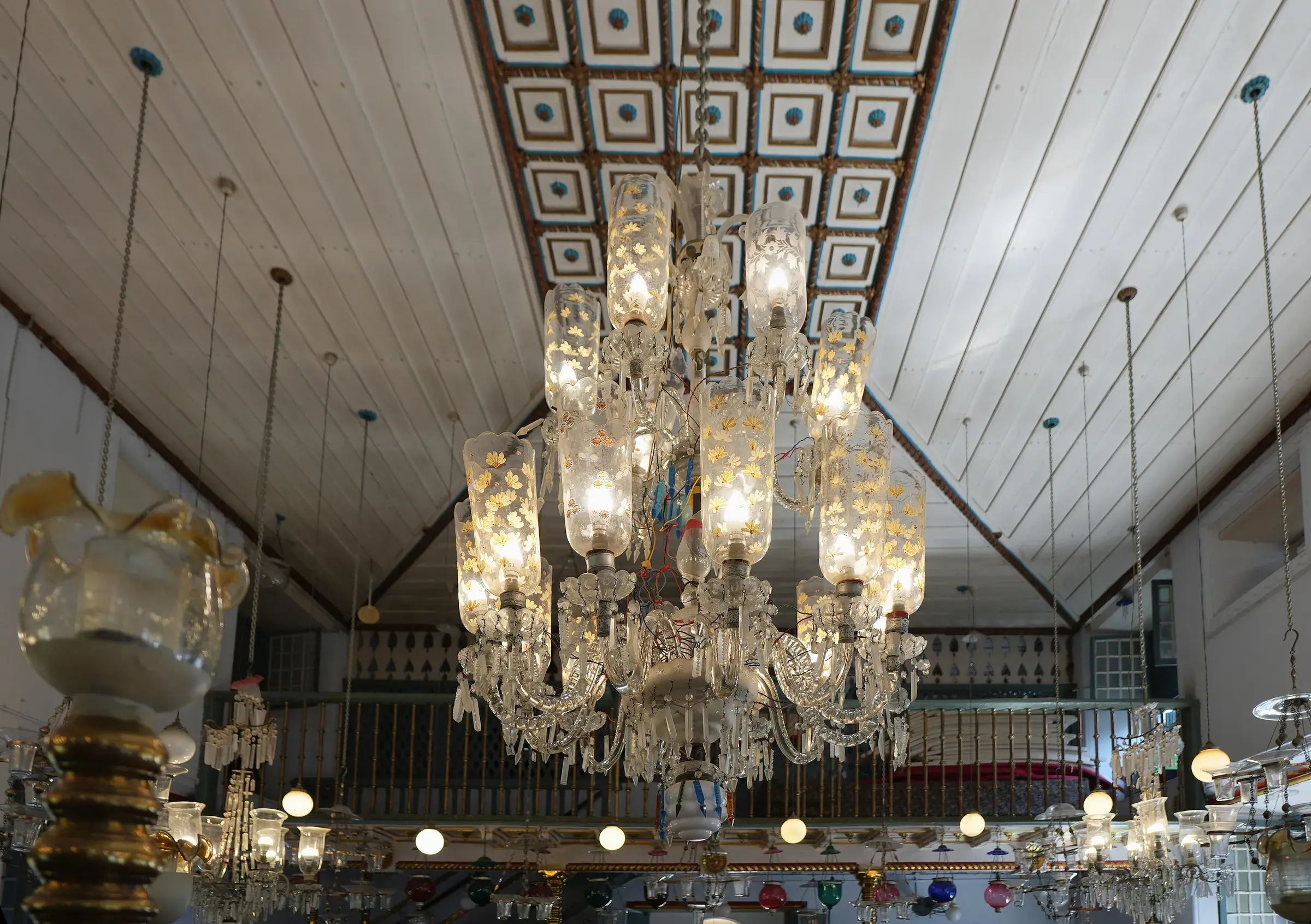
  3. Glass chandeliers hanging in the Paradesi Synagogue
    Heritage
    03

    Paradesi Synagogue

    Built in 1568, the synagogue is floored with hand-painted blue Chinese tiles and lit by Belgian glass chandeliers. It stands at the end of Jew Town's lane of spice warehouses and antique shops.

    Best time · Year-round (closed Fridays, Saturdays & Jewish holidays)

    Google Maps(opens Paradesi Synagogue in Google Maps, new tab)
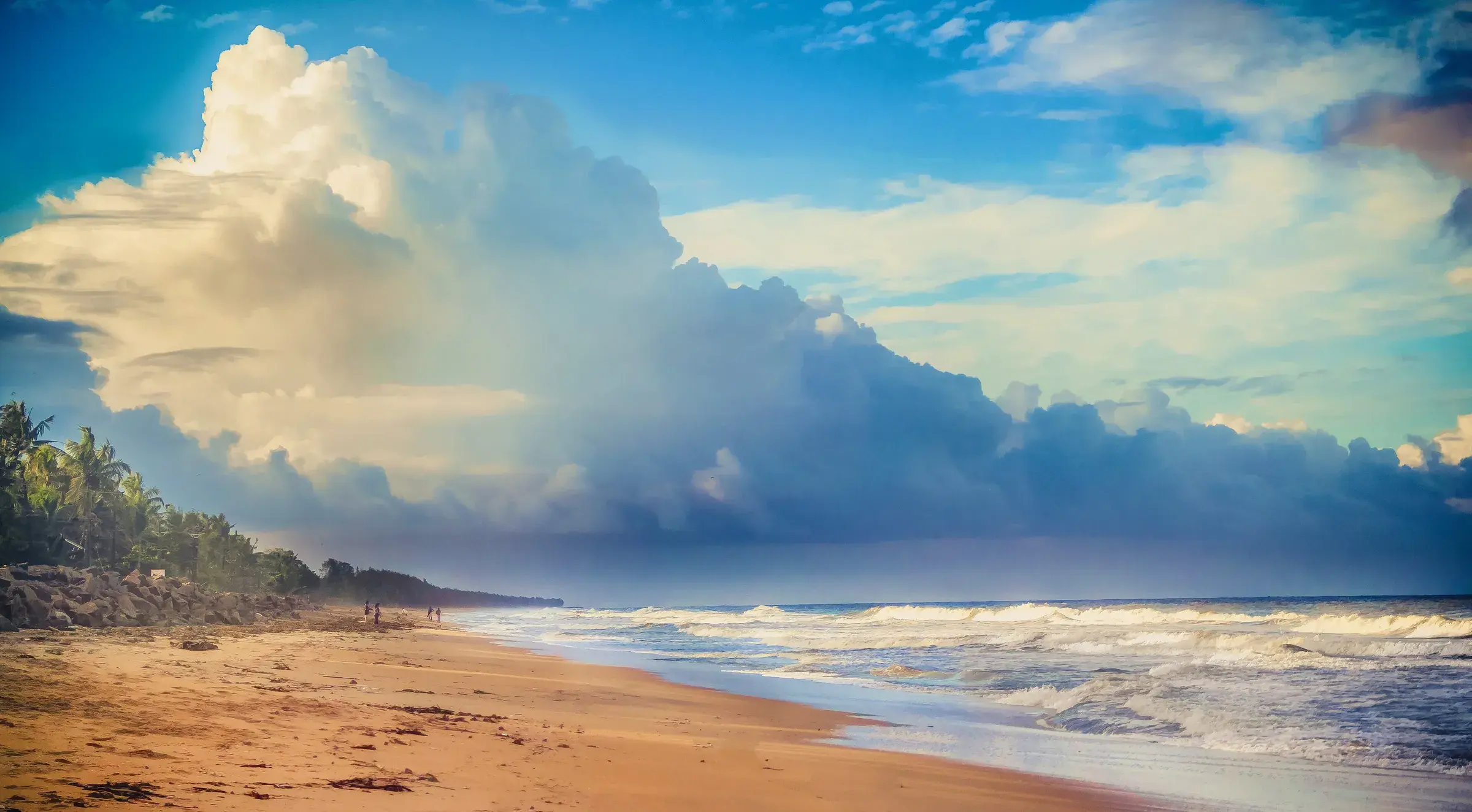
  4. Sunrise over the waves at Cherai Beach
    Beach
    06

    Cherai Beach

    On Vypin island, a long golden beach runs parallel to backwaters just a few hundred metres inland — sea on one side, lagoon on the other. Dolphins are sometimes seen offshore.

Taste, celebrate, perform

Food, festivals & art forms

ഭക്ഷണം

Food

  • Karimeen pollichathu

    Pearl spot from the backwaters, roasted in banana leaf — on every waterfront menu in Kochi.

  • Appam & mutton stew

    Fort Kochi's Christmas-morning breakfast, mellow with coconut milk and whole spices.

  • Kochi's mixed kitchens

    Jewish, Anglo-Indian, Latin Catholic and Konkani households each keep distinct recipes, from cutlets to fish moilee.

ഉത്സവങ്ങൾ

Festivals

  • Kochi-Muziris Biennale

    India's largest contemporary art exhibition, spread across warehouses and heritage buildings every two years.

  • Cochin Carnival

    Fort Kochi's New Year celebration, ending with the burning of the giant Pappanji effigy at midnight.

  • Thrippunithura Athachamayam

    A grand procession on Atham day that opens the Onam season, recalling the march of the Cochin kings.

കലകൾ

Art forms

  • Chavittu Nadakam

    A musical drama of the Latin Christian coast, with stamping footwork and costumes that echo Portuguese-era Europe.

  • Contemporary art

    The Biennale turned Fort Kochi and Mattancherry into a gallery quarter of studios and cafés.

  • Kathakali

    Nightly abridged performances in Fort Kochi, with a chance to watch the make-up being applied.